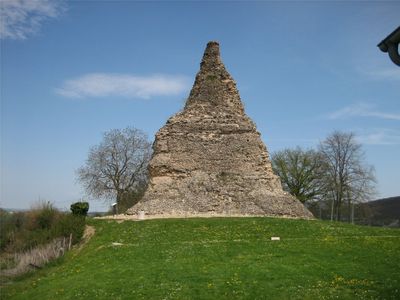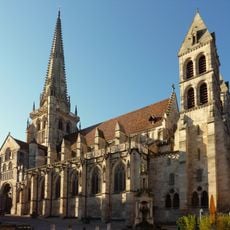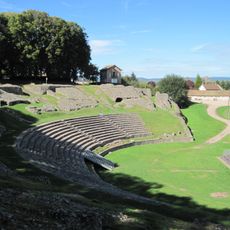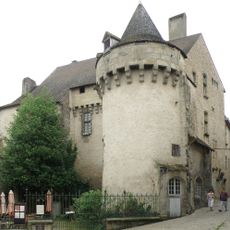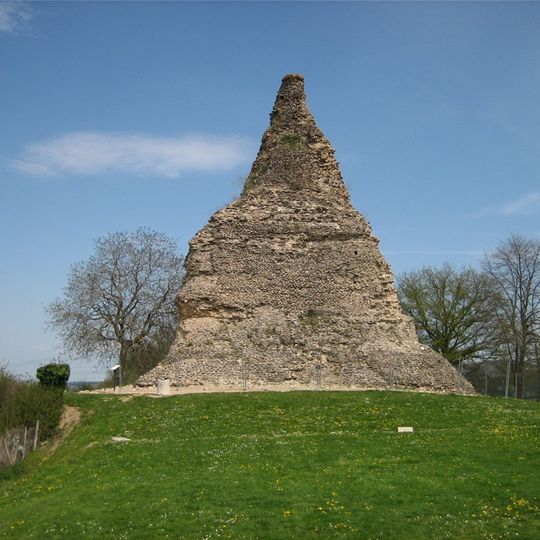
Pyramid of Couhard, Ancient Roman funerary monument in Autun, France.
The Pyramid of Couhard is the surviving rubble core of a Roman pyramid with a square base 10.50 m on each side, now 22.65 m high; with its original facing it reached about 33 m. It has no inner chamber. A hole pierced by the 1640 excavations of abbé de Castille remains visible, and a plan from the time of Francis I records a white marble facing.
The tomb was built in the 1st century AD when Autun rose to become the new regional capital. It belonged to a period of intense Roman urban development as the older settlement of Bibracte was abandoned.
The name comes from the hamlet of Couhard beside it, and the monument stood in the Champ des Urnes, one of the necropolises outside the walls of Roman Augustodunum. Visitors can still see the hole opened in 1640 by the abbé de Castille, who hoped to find a burial chamber inside the solid masonry and found none.
You can visit the monument year-round, it is within walking distance from the town center and accessible by marked paths. A nearby museum offers information about the Roman history and archaeology of the site.
During excavations in the 1960s, a lead tablet with Latin and Greek inscriptions was discovered at the base of the structure. This rare inscribed object reveals clues about who the tomb was built for.
The community of curious travelers
AroundUs brings together thousands of curated places, local tips, and hidden gems, enriched daily by 94,475 contributors worldwide.