Capitole de Toulouse, City hall and theater in Toulouse, France
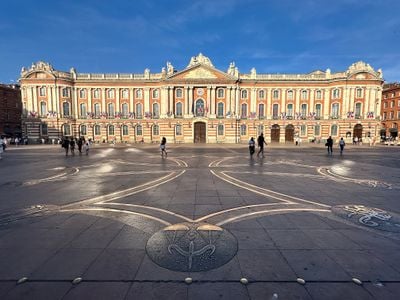
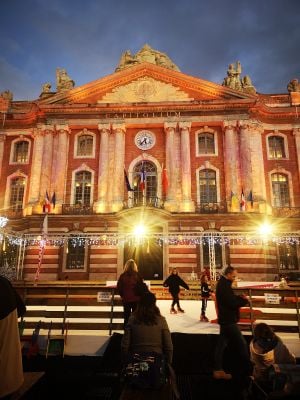
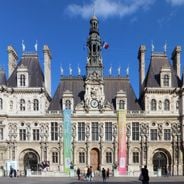
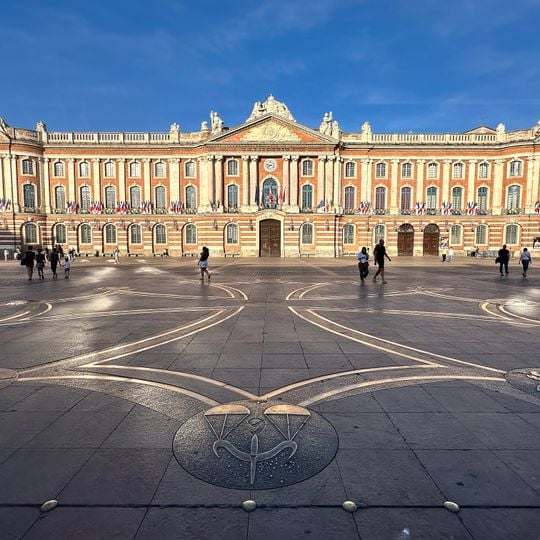
The Capitole is Toulouse's city hall and opera house, a 135-metre neoclassical building completed in 1760 to Guillaume Cammas's design. Its pink brick and stone facade has eight Corinthian columns of Caunes-Minervois marble, one for each of the city's original eight capitouls, beneath a pediment with a clock. The Henri IV courtyard and 16th-century donjon survive behind it.
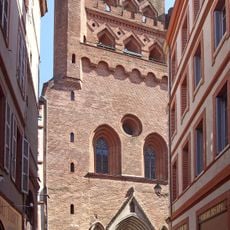
The Capitouls, Toulouse's governing magistrates, commissioned the first structures on this site in 1190. The dungeon tower, le donjon, was completed in 1530; during the 1562 Riots of Toulouse, Huguenot forces held it with captured cannons. In 1632 Henri de Montmorency was beheaded in the Henri IV courtyard. The 135-metre neoclassical facade by Guillaume Cammas was completed in 1760.
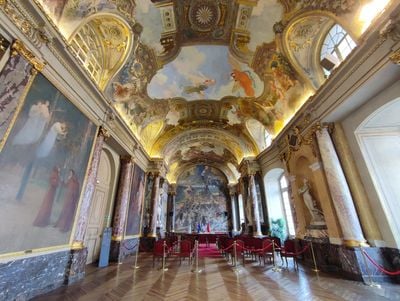
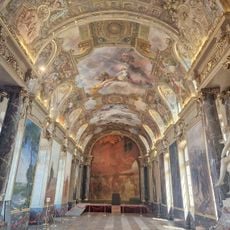
The Salle des Illustres was created between 1892 and 1898 by the painter and sculptor Paul Pujol with a group of artists. Its decoration honours figures from Toulouse's history, and the room is one of those classified as a monument historique in 1995. The name recalls the illustrious citizens the city chose to commemorate.
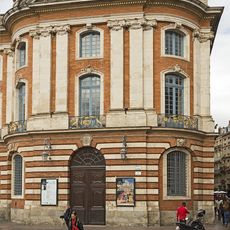
The building serves as the seat of city government and as a venue for opera and theater performances with seating for audiences. Visitors should plan ahead to see the interiors, as access may vary depending on events and rehearsals taking place.
The eight Corinthian columns of the facade are made of Caunes-Minervois marble and stand for the eight capitouls who governed Toulouse's eight districts. The pediment's sculptures are 1988 copies of works by Louis Parant, and the marble plaque reading "Capitolium" dates from 1759.
The community of curious travelers
AroundUs brings together thousands of curated places, local tips, and hidden gems, enriched daily by 93,899 contributors worldwide.