Dissignac tumulus, Neolithic burial site in Saint-Nazaire, France.
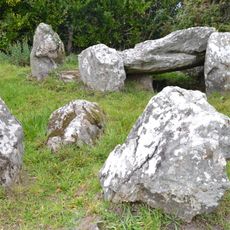
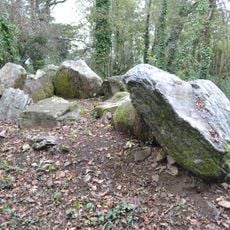
The Dissignac tumulus is a Neolithic burial monument containing two interconnected burial chambers reached through narrow passageways. The structure is built from large granite and other stone blocks carefully stacked to form its underground chambers and protective mound.
The monument was built in two stages: two dolmens were erected around 4500 BCE, then the passages were extended around 2990 BCE, enlarging the mound to its present 21 m diameter. Excavated in 1873 by A. Martin and R. Kerviler, it was re-examined in the 1970s and 1980s by Jean L'Helgouach, who identified the two phases. It has been a classified historical monument since 1889.
The carved stone slabs inside the chambers feature engravings depicting axes, curved staffs, and other symbols from the Neolithic world. These markings offer insight into the beliefs and thoughts of those who created this burial place.
The site is located outside town and can be difficult to reach without prior planning. Check conditions and access arrangements ahead of your visit, as opening times and guided tour availability change throughout the year.
The monument has three concentric enclosures, not just one: the first, 2 m high, is of local gneiss; the second has upright granite and quartz blocks topped with pebbles; the third is a low rubble wall. The gaps between them were filled with stone rubble.
The community of curious travelers
AroundUs brings together thousands of curated places, local tips, and hidden gems, enriched daily by 93,468 contributors worldwide.