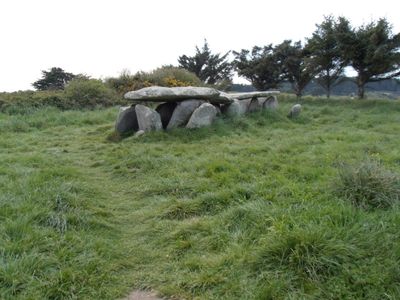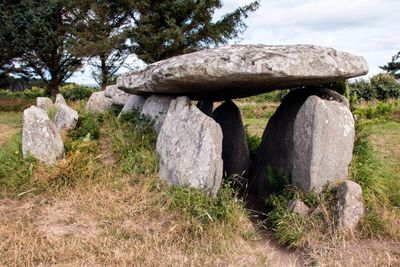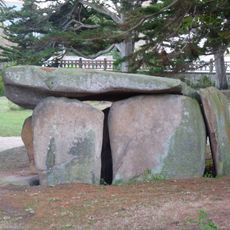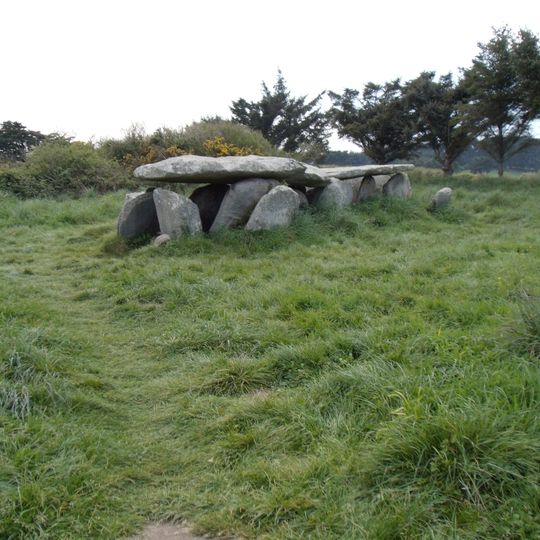
Allée couverte de l'Île-Grande, gallery grave in Pleumeur-Bodou, France
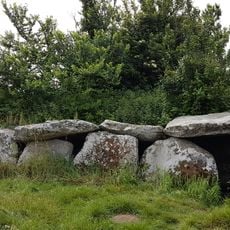
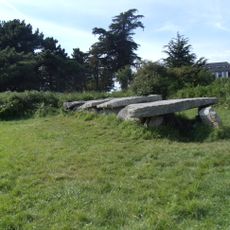
The Allée couverte de l'Île-Grande is a Neolithic burial monument in Pleumeur-Bodou, Brittany, measuring about 8.5 meters long with upright granite stones on each side supporting large flat roof slabs. Inside, two rows of pillars frame a chamber that once served as the final resting place for the dead of early communities.
This passage grave was built at the end of the Neolithic period when early peoples began constructing permanent stone monuments for burial and ceremony. The site gained official protection as a historic monument in 1956 following excavations in the late 1800s and early 1900s that uncovered tools, pottery, and metal objects now lost.
This stone structure served as a gathering place where ancient communities honored their dead and held important ceremonies. The site reflects how people used built spaces to connect with their beliefs and maintain bonds with those who had passed away.
The site sits about 115 feet (35 meters) above sea level and is accessible from nearby roads with open access during daylight hours and no security barriers. Visitors should handle the ancient stones respectfully by avoiding climbing on the structure or disturbing it, as the fragile monument requires protection from damage.
Local legends tell of tiny fairies called Kornandounezed that danced on the stones during full moons and granted prophecies to pregnant women about their future children. A 19th-century story also claimed that lepers once lived inside the tomb and were fed with a fork, adding layers of mystery to this ancient site.
The community of curious travelers
AroundUs brings together thousands of curated places, local tips, and hidden gems, enriched daily by 92,634 contributors worldwide.