Barrage de Guerlédan, Hydroelectric dam in Brittany, France
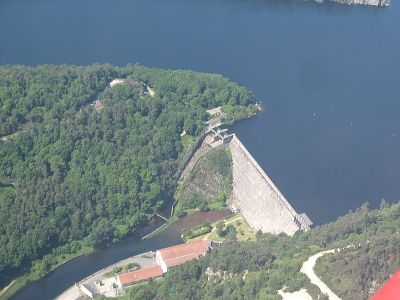
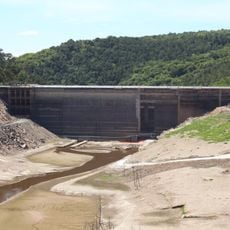
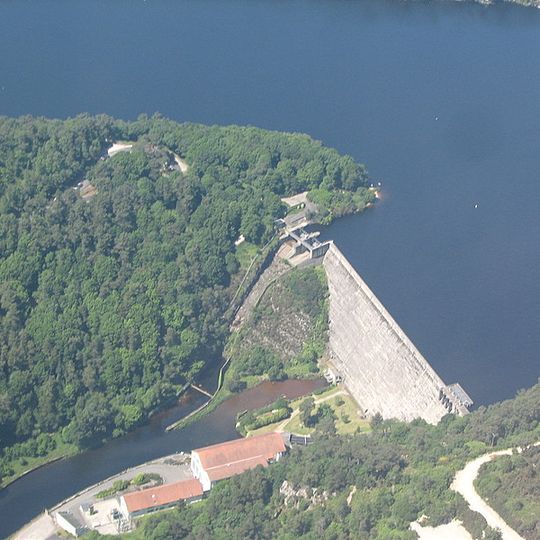
The Guerlédan Dam is a concrete gravity dam that holds back the Blavet River, creating a large reservoir. Its straight crest, edged by a low parapet, runs diagonally between wooded banks, and the grey stone face slopes down to the water, marked by faint vertical joints.
Built between 1923 and 1930, the dam was one of the first large hydroelectric projects in France and required a pause in construction due to funding issues. It was inaugurated in 1930 and began producing electricity the following year, later managed by Électricité de France.
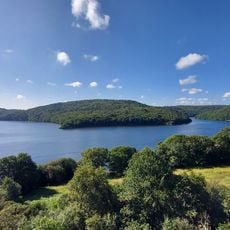
The dam is a local landmark that shapes life around the lake, where people swim, sail, and walk in summer. The nearby museum in Saint-Aignan tells the story of the dam and the valley it flooded, adding context to what visitors see today.
The dam is best seen from the surrounding hills or from the lake itself, and paths around the reservoir offer different angles. Visitors should stay on marked trails and respect warning signs near the water, as levels can change without notice.
When the lake is drained for maintenance, remains of old locks, canal paths, and house walls from the submerged valley reappear. The dam also cut the Nantes to Brest canal, flooding 17 locks and ending through navigation.
The community of curious travelers
AroundUs brings together thousands of curated places, local tips, and hidden gems, enriched daily by 94,468 contributors worldwide.