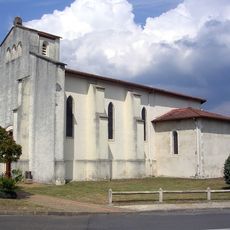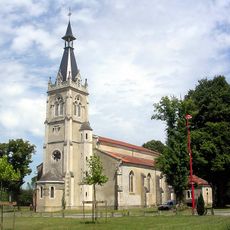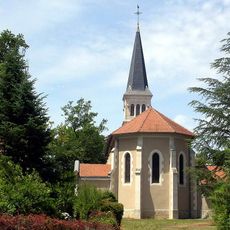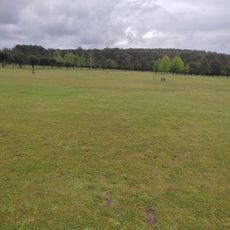
Bornes de sauveté de Mimizan, Boundary stones of a medieval sauveté in Mimizan, France
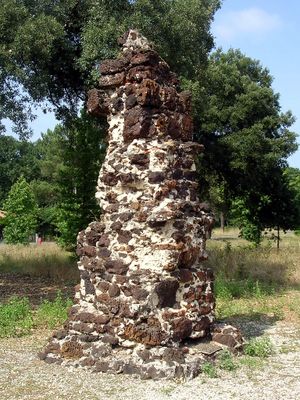
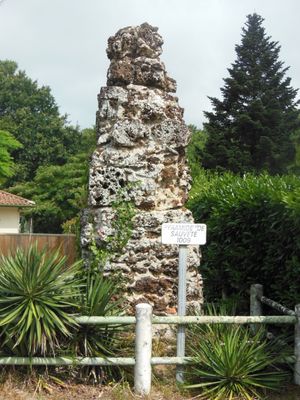
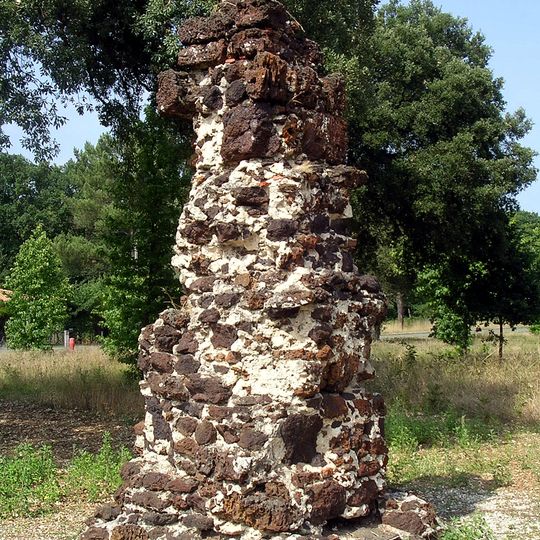
The Bornes de sauveté de Mimizan are five masonry stone piles of garluche, a dark brown and reddish porous stone bound with thick white mortar, tapering toward the top where a larger block sits. Originally 4.10 to 4.50 metres high and topped with a cross, they were built on mounds about 1,800 metres apart to be seen from the open plain.
The first mention of Mimizan's "frangitas" (a protected manse) dates from between 1009 and 1032, when Duke Sanche Guillaume confirmed the donation of the Benedictine priory of Sainte-Marie to the abbey of Saint-Sever. The "Salvitas" of Mimizan itself is first recorded in 1270, originally bounded by seven to nine stones set about 1.5 km from the abbey, forming an irregular polygon of over 200 hectares. The five surviving stones were listed as monuments historiques on 13 June 1941.
These markers once designated zones where local people enjoyed special rights and protection from the authorities. Within these boundaries, property could not be seized and residents found refuge from external threats.
Four of the five remaining stones are accessible to visitors, while one stands within the grounds of the Gascogne Papier industrial complex. It is best to visit the accessible locations during daylight hours when the surroundings are clearly visible and easier to navigate.
These stones received their historical monument designation only in June 1941 during the German occupation, despite being nearly 1000 years old. Their late official protection makes them a rare example of such an ancient safety zone that was formally recognized only in the 20th century.
The community of curious travelers
AroundUs brings together thousands of curated places, local tips, and hidden gems, enriched daily by 94,304 contributors worldwide.