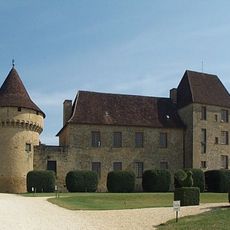
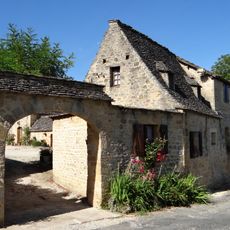
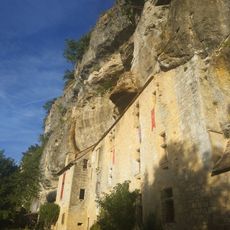
Castel Merle, Prehistoric rock shelters in Sergeac, France.
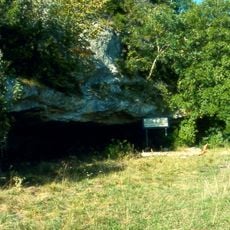
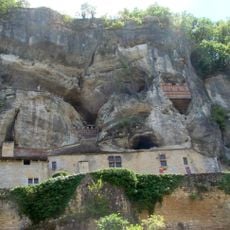
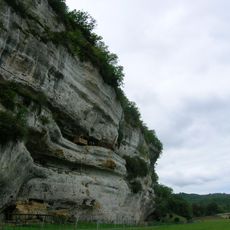
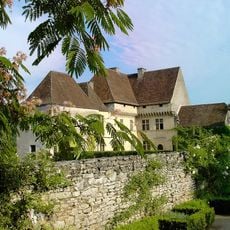
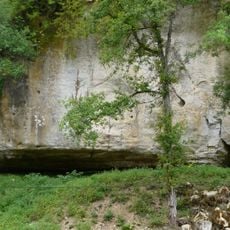
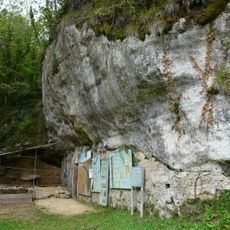
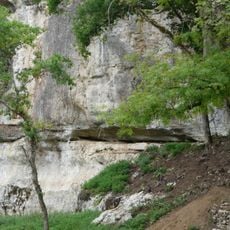
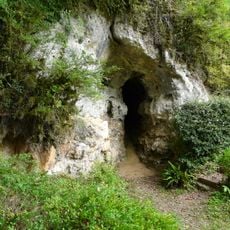
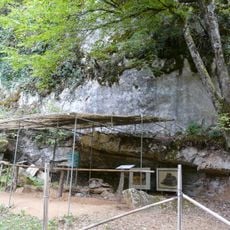
Castel Merle is an archaeological complex stretching along about 400 meters of cliff faces, containing six prehistoric rock shelters positioned on two opposing rock walls. The site displays settlement layers from different time periods, allowing visitors to trace how early human living spaces evolved over millennia.
Castel Merle's shelters were occupied from the Mousterian to the Magdalenian, between about 160,000 and 12,000 years ago. Neanderthals used the Merveilles and Blanchard II shelters; Cro-Magnon groups then occupied the better-exposed shelters on the opposite cliff: Reverdit, Roc d'Acier, Labattut and La Souquette. Reverdit was excavated by Alain Reverdit in 1875, then by Delage between 1911 and 1914, and Castanet found its sculpted frieze in 1923.
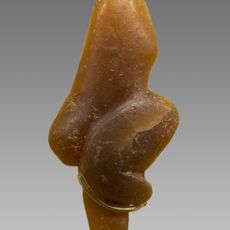
The artifacts found here reveal how people lived and expressed themselves: tools carved from mammoth ivory, decorated stones, and ornaments made from seashells and animal teeth show what mattered to them. These handcrafted objects tell stories of daily life in a world far older than ours.
The site is accessible during warmer months and offers guided tours along with activities showing how prehistoric people lived. Wear sturdy shoes and prepare for uneven ground, as the path follows the rock wall along the cliff.
The Reverdit shelter's ceiling frieze was found damaged in 1923 by Marcel Castanet; it shows a horse, two bison and a bear's head in low relief. The shelter had earlier served as a shepherd's hut and holds a small spring. It was listed as a monument historique on 5 July 1924.
The community of curious travelers
AroundUs brings together thousands of curated places, local tips, and hidden gems, enriched daily by 93,530 contributors worldwide.