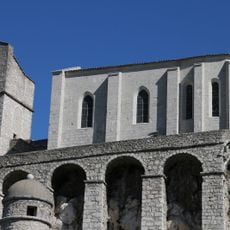
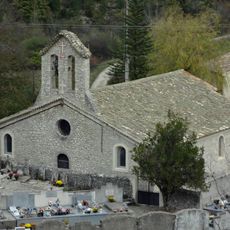
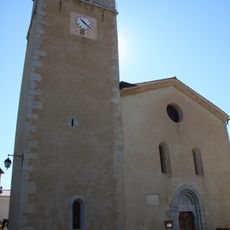
Sisteron Cathedral, Romanesque cathedral in Sisteron, France.
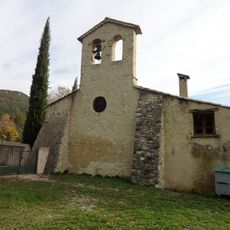
Notre-Dame-des-Pommiers is a Romanesque cathedral in Provence with three naves and barrel vaults built by Lombard craftsmen starting in the 1160s. The building features a dome resting on squinches at the choir entrance and three round windows set into its western front.
Construction began under Bishop Pierre de Sabran (1145–1171), though Yann Codou and Mathias Dupuis date the start closer to the late 12th century, with most work under Bishop Henri de Suse. In 1564 Protestants sacked the cathedral, destroying the bell tower, bells, altars and archives. Restoration came under Bishop Toussaint de Glandevès (1606–1648), and the building was listed as a monument historique in 1840.
The cathedral is called Notre-Dame-des-Pommiers because it was built in the space between the town's houses and defensive walls. This name connects the building directly to Sisteron's medieval layout and how the city was organized.
The main entrance is on the western facade, through a portal set between two buttresses beneath a triangular pediment. The interior is notably dark, lit mainly by three oculi in the west front and round-arched windows in the apses, so allow time for your eyes to adjust. A secondary door opens on the north facade, unusual in Provençal Romanesque churches.
The cathedral's name comes from the Latin word 'pomerium', which referred to the open space between town buildings and defensive walls. Few visitors realize this medieval location reference is preserved in the building's name to this day.
The community of curious travelers
AroundUs brings together thousands of curated places, local tips, and hidden gems, enriched daily by 94,632 contributors worldwide.