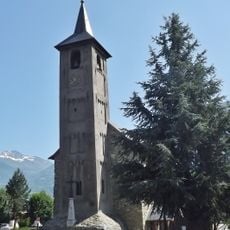
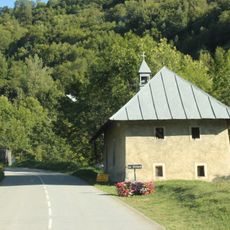
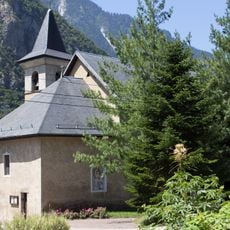
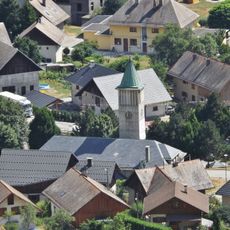
Saint-Jean-de-Maurienne Cathedral, Catholic cathedral in Saint-Jean-de-Maurienne, France
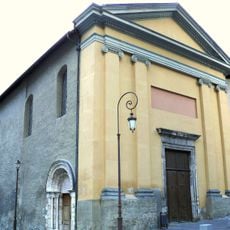
Saint-Jean-de-Maurienne Cathedral is a Romanesque church rebuilt from the mid-11th century to around 1075, with a nave about 60 metres long ending in a rounded apse and side chapels. In 1452 Cardinal d'Estouteville added wooden rib vaults in the Gothic style, supported by stone reinforcements, and tall pointed windows. The pale stone facade has a triangular pediment topped by a cross, three round-arched portals, and a neoclassical porch added in 1771.
King Gontran founded the first cathedral in the 6th century after detaching the Maurienne from the Diocese of Turin; Pope Gregory I confirmed the new see in 599. Saracen raids destroyed the church in 943. Rebuilt from the mid-11th century and completed around 1075, it was given wooden Gothic vaults in the 1450s under Cardinal d'Estouteville.
The cathedral's name comes from the relic of Saint John the Baptist that, according to the legend recorded by Gregory of Tours, a woman of Maurienne brought back after praying for it. In the 10th-century version she is named Tigris, and in the 12th-century account by Peter Comestor she becomes Thecla. The relic made the small town a pilgrimage destination and led to the creation of the bishopric.
The cathedral sits in the center of town and is easily accessible on foot. Visitors should check opening times before arriving, as these can vary depending on religious services and the season.
The cathedral holds the remains of the first three counts of the House of Savoy: Humbert I, Amédée I and Boniface. Humbert, who died in 1048, was buried here, and the tombs make the church a dynastic burial site of the family that later ruled Piedmont and Italy.
The community of curious travelers
AroundUs brings together thousands of curated places, local tips, and hidden gems, enriched daily by 93,472 contributors worldwide.