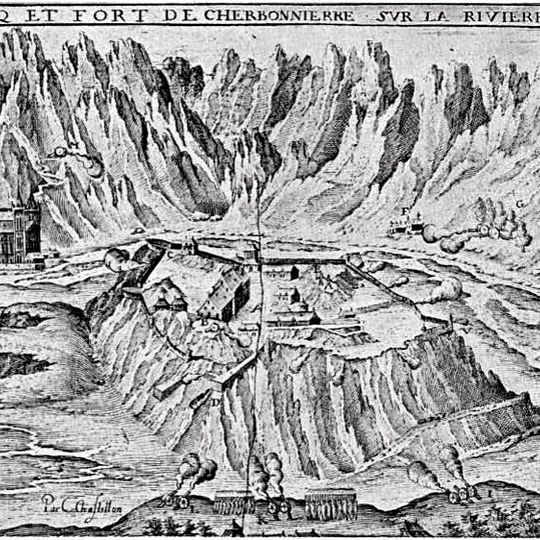
Château de Charbonnières, Medieval fortress in Aiguebelle, France
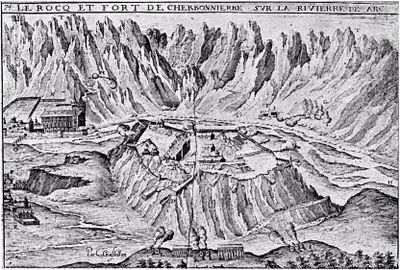
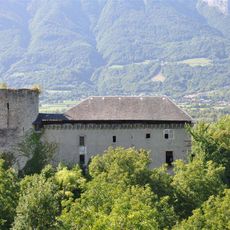
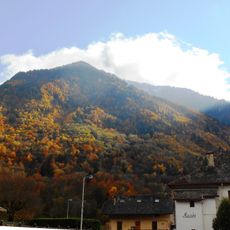
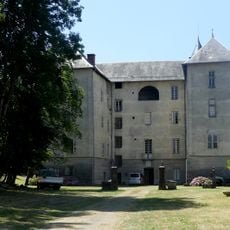
Château de Charbonnières is a medieval fortress built on a steep hillside that overlooks the surrounding valley and lower settlements. The elevated position allowed defenders to monitor routes and protect the valley below, while fortified walls and towers formed the core of the structure.
The fortress was built in the 11th century by the Counts of Maurienne to strengthen their control of the region. The counts later moved their base of power to other locations, leaving the castle to decline over time.
The name Charbonnières probably comes from the Latin carbonaria, a place where charcoal was made, though the local historian Léon Menabrea argued in 1841 that it was a military term for palisade fortifications. The counts of Savoy stayed here often even after moving their residence to Montmélian and Chambéry in 1295. A charter signed at the castle by Peter II of Savoy on 8 April 1266 established a fair and a weekly market at Saint-Michel-de-Maurienne.
The ruins stand on a rock about 80 metres above the village of Aiguebelle and the Arc, reached on foot from the valley. The site is ruined and was already in ruins by the 18th century, so expect uneven stone and no facilities. Allow time for the climb and wear sturdy shoes.
The 1597 siege ended in eight days: Lesdiguières and his son-in-law Créquy surrounded the castle, and its garrison of only fifty men surrendered. Charles Emmanuel I of Savoy retook it on 7 March 1598. The site also held the counts of Savoy's first mint, striking deniers modelled on the coinage of the bishops of Vienne under Othon I.
The community of curious travelers
AroundUs brings together thousands of curated places, local tips, and hidden gems, enriched daily by 95,293 contributors worldwide.