Château-musée de Boulogne-sur-Mer, Art museum in a medieval castle, Boulogne-sur-Mer, France
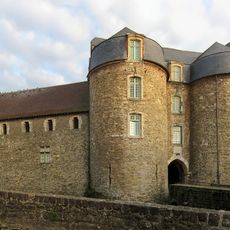
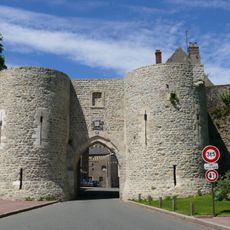
The château-musée de Boulogne-sur-Mer occupies the former count's castle in the old town, a grey stone fortress with a large round-headed carriage arch topped by a triangular pediment and a small sculpted crest. Flanking the arch, round bastion-like towers rise into dark steep roofs, and a squat domed turret sits above the pediment. A blue sign beside the arch reads "CHATEAU MUSEE". The museum, founded in 1825, has been housed here since 1988.
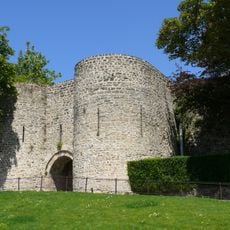
The castle stands on the site of the Roman camp of the Classis Britannica, whose walls were later overlaid by 13th-century ramparts. The museum itself was founded in 1825 from the cabinet of curiosities of painter Alexandre Isidore Leroy de Barde and opened in the former seminary. It moved into the castle in 1988, the year the town acquired the building.
The museum's name comes from its home since 1988, the count's castle. Its Egyptian collection began with about 150 objects donated by Boulogne-born Auguste Mariette, founder of the Cairo museum. The Greek vases, bought from Panckoucke in 1861, include Exekias's Suicide of Ajax. The Oceanian and Inuit core came from the cabinet of Alexandre Isidore Leroy de Barde, purchased by royal ordinance in 1825.
Wear comfortable shoes to explore the many stairs and towers, as the complex has multiple levels that require steady walking. Plan at least two to three hours to properly explore the collections and architectural features throughout the site.
The castle stands on the site of the Roman camp of the Classis Britannica, the British fleet, and its 13th-century ramparts are superimposed on the earlier Roman enceinte. Inside, visitors can see the Gallo-Roman underground passages and remains of the castrum fortifications.
The community of curious travelers
AroundUs brings together thousands of curated places, local tips, and hidden gems, enriched daily by 94,554 contributors worldwide.