Château de Boulogne-sur-Mer, Medieval castle in Boulogne-sur-Mer, France
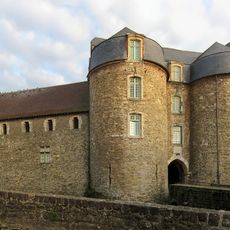
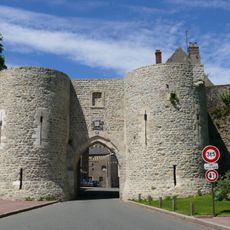
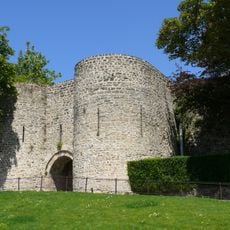
The Château de Boulogne-sur-Mer is a medieval fortress in this northern French port city built with nine cylindrical towers linked by defensive walls that form an uneven polygon. The structure sits within the old city walls and now contains a museum displaying collections from various cultures and time periods.
Philippe Hurepel, count of Boulogne and son of Philip II, built the castle and its town walls in a single campaign from 1227 to 1231. The duc de Berry made major alterations between 1394 and 1416, and the horseshoe-shaped section was finished around 1567. In 1767 it became a barracks, later a prison until 1974, and the museum opened in 1988.
The castle's name comes from Boulogne, and its gate carries a white sign reading "CHATEAU MUSEE". The underground Barbière room, named after Saint Barbara, patron saint of artillerymen, was used as a gunpowder magazine; its two parallel vaulted naves rest on three columns, one with a capital carved with arum leaves.
The castle stands at the end of the old town, and its gatehouse opens onto a cobbled street; the entrance has lost its drawbridge. Parts of the site, including the basement rooms, are not accessible to visitors with reduced mobility because of the old architecture. The museum occupies the former lodgings and kitchens around the central courtyard.
The basement preserves visible sections of the original Roman walls from the ancient city that once stood here. These layers reveal how different periods of history accumulated in the same spot, showing this location's enduring strategic importance.
The community of curious travelers
AroundUs brings together thousands of curated places, local tips, and hidden gems, enriched daily by 92,935 contributors worldwide.