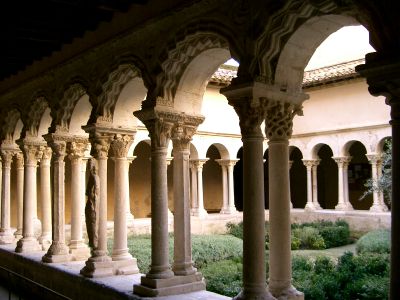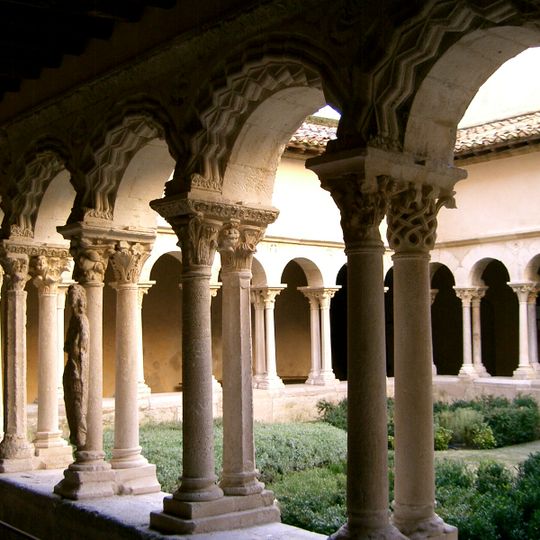
Cloître de Saint-Sauveur d'Aix-en-Provence, Romanesque cloister in Aix-en-Provence, France.
The cloître Saint-Sauveur consists of four galleries of eight bays, each formed by round arches on paired columns, built around 1190 by the cathedral canons. The galleries are covered with timber rather than stone vaults, which allowed the slender columns and the absence of buttresses. Only the four corners have heavy piers, carved with the man, lion, eagle and bull of the Apocalypse.
The canons of Aix Cathedral built the cloister around 1190 on part of the forum of the Roman castellum founded by Caius Sextius Calvinus in 122 BC. The east wing adjoined a dormitory in a late 11th-century building reworked in the 14th century, and the provost's lodging stood in the south wing. It was listed as a monument historique in 1875.
The four corner pillars display sculptural representations of the four evangelists from the Apocalypse: man, lion, eagle, and bull, embodying Christian symbolic tradition.
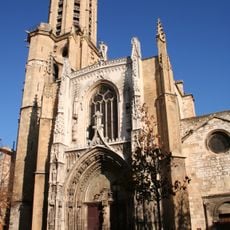
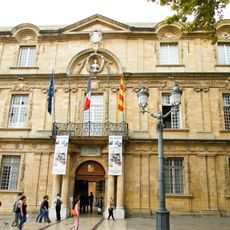
The cloister lies south of the Corpus Domini nave of Aix Cathedral; the old solemn entrance faced the archbishop's palace square to the south. The galleries are not vaulted but covered with a timber frame, so look up at the roof structure as well as the paired columns. Four corner piers carry the evangelist symbols, starting with the angel on the south-west pier.
On 16 April 1601 the provost Gilbert-Charles Desbiès was found dead at the foot of a column, his chest crushed by blows from sacks of earth or lead, a method the Provençal calls "saquettar". Bernardin Delphin-Gonzard, known for his hostility toward him, was arrested by the archbishop and jailed for years, then freed for lack of proof.
The community of curious travelers
AroundUs brings together thousands of curated places, local tips, and hidden gems, enriched daily by 93,871 contributors worldwide.