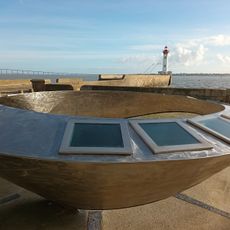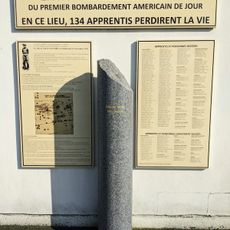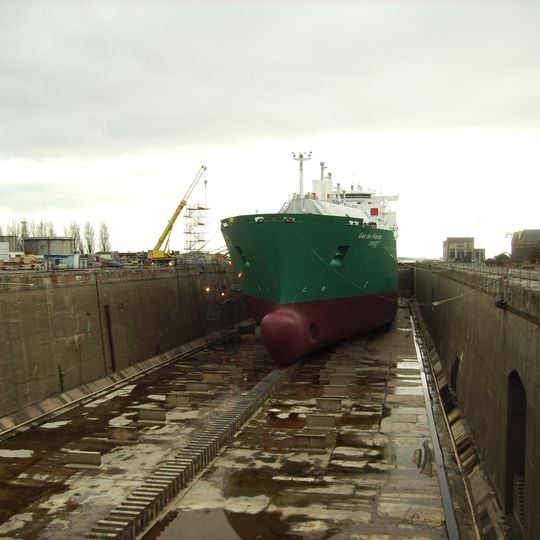
Louis Joubert Lock, Maritime lock in Saint-Nazaire, France
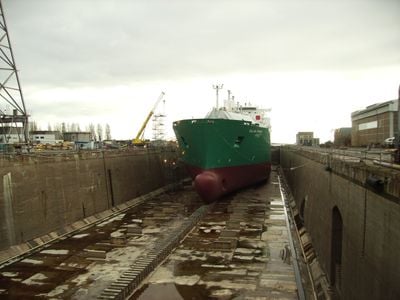
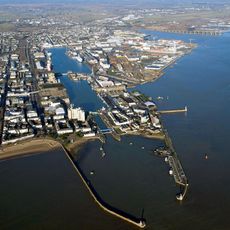
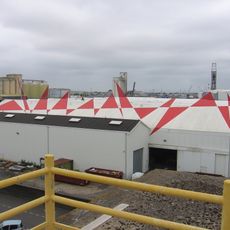
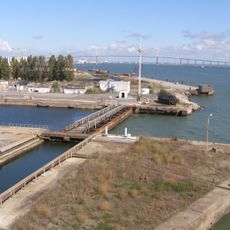
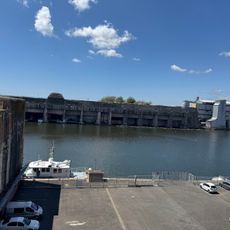
The Louis Joubert Lock is a maritime lock in Saint-Nazaire that allows large vessels to access the port and serves as a dry dock for maintenance work. The structure combines the functions of a passage lock with a dry dock, where ships can be emptied for underwater repairs.
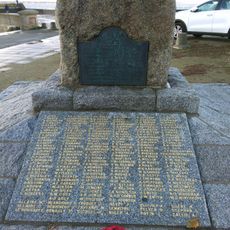
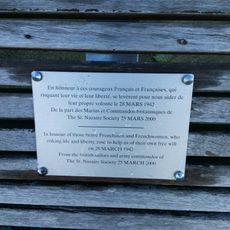
The lock was built between 1929 and 1933 and became the target of Operation Chariot in 1942, when British forces launched a raid to prevent German warships from using it. This attack marked a turning point in the Second World War for the port.
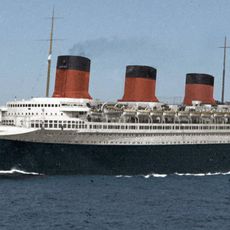
The lock is named after Louis Joubert, president of the Saint-Nazaire Chamber of Commerce, who died in 1930. Locals also call it the Normandie Dock, after the liner whose construction drove the project. The first ship docked after wartime repairs was the former German liner Europa, refitted as the SS Liberté and given to France by the United States as compensation for the loss of the Normandie in New York.
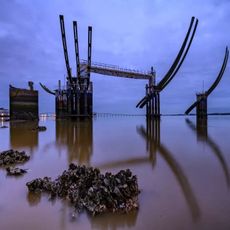
The lock is a working industrial facility of the Grand port maritime de Nantes-Saint-Nazaire, not a site open for tours, so it is seen from outside the port perimeter. The chamber is 350 m long, 50 m wide and 15.25 m deep, with gates 51 m long and 11 m thick built of hollow steel sections. The 2010 gate on the estuary side measures 50 m by 17 m and weighs 1,280 tonnes.
The lock's gates are caisson-and-camber structures, each 51 metres long and 11 metres thick, built from hollow steel sections. A new estuary-side gate, 50 metres long, 17 metres wide and weighing 1,280 tonnes, was installed in 2010.
The community of curious travelers
AroundUs brings together thousands of curated places, local tips, and hidden gems, enriched daily by 92,643 contributors worldwide.