Habitation Anse Latouche, Colonial agricultural estate in Le Carbet, France.
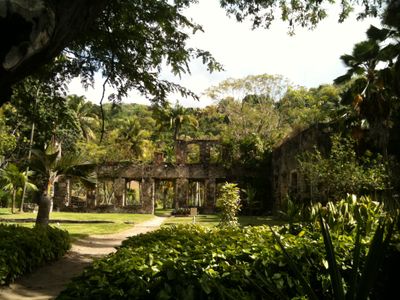
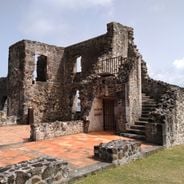
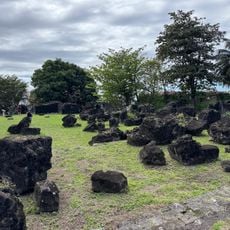
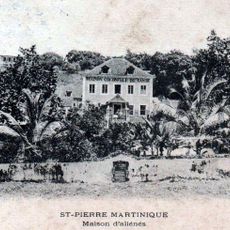
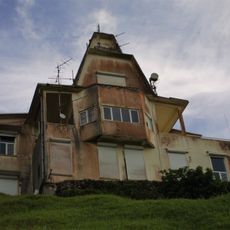
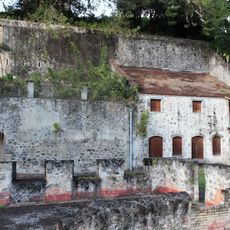
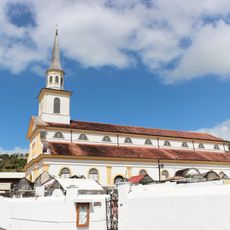
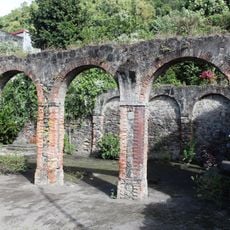
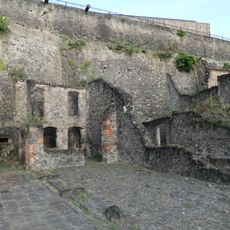
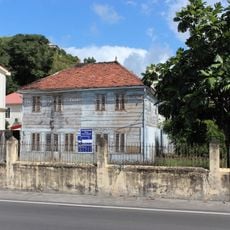
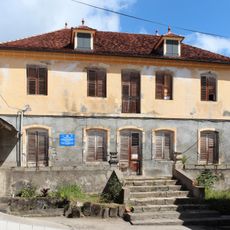
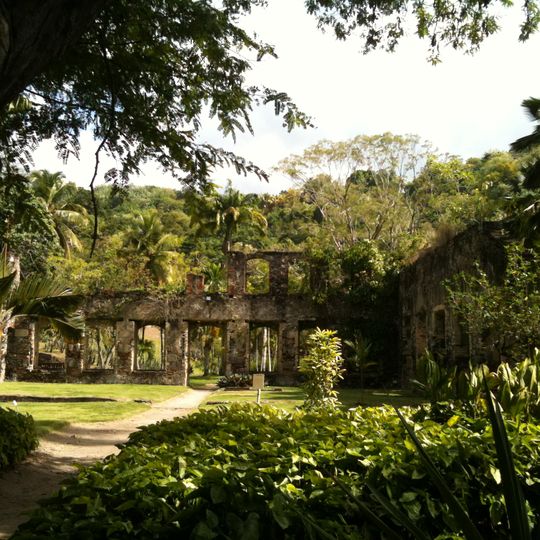
Habitation Anse Latouche is a former plantation spanning Le Carbet and Saint-Pierre whose master house, documented on a 1720 plan, survives as roofless ruins: grey and brown masonry with four rectangular upper windows and taller ground-floor openings, moss on the walls, trees pressing close. The two-storey colonial house had black-and-white marble floors, red brick walls and many openings; a 1743 basin with a water jet remains in the garden.
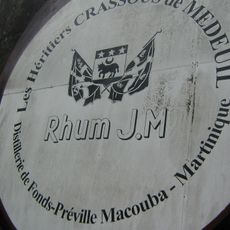
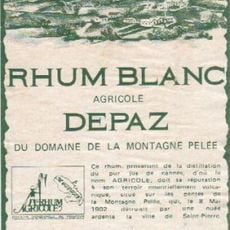
Founded in the 1640s, the estate was one of Martinique's oldest plantations. In May 1717 it was the scene of the Gaoulé revolt, when colonists held governor de la Varenne and his intendant prisoner. The Ambaud brothers installed a rum distillery in 1889, which stopped production in 1940. The 1902 eruption of Mount Pelée destroyed the estate and killed the Marie family, its owners.
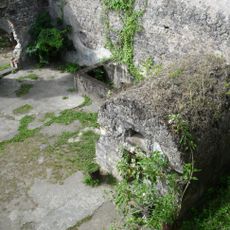
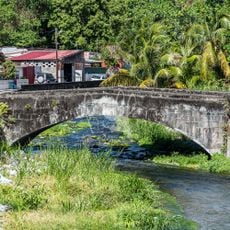
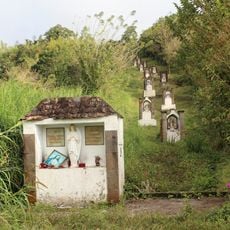
The name comes from François-Samuel Levassor, sieur de Latouche, who married Marie-Madeleine Dorange in 1667 and gave his name to the river and the estate. Across the Latouche river, on the slope facing the master's house, stood the slave quarter with 24 cases; ruins of workers' huts still line the rise above the stream that powered the mill, on the Saint-Pierre side.
The property now operates as the Zoo de Martinique, allowing visitors to explore both historical structures and animal exhibits on the same grounds. This combination means you can experience the historical site and animal attractions without traveling to separate locations.
A stone basin with a water jet bearing the date 1743 still occupies the centre of a garden within the estate. It is one of the few dated features to survive the 1902 eruption, which destroyed the master's house attested on a 1720 plan.
The community of curious travelers
AroundUs brings together thousands of curated places, local tips, and hidden gems, enriched daily by 92,883 contributors worldwide.