Glacière de Pradelles-Cabardès, Icehouse in Pradelles-Cabardès (Aude)
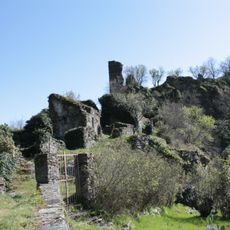
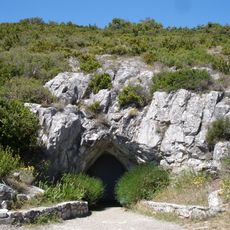
The Glacière de Pradelles-Cabardès is a semi-buried cylindrical pit 8 to 10 metres across and about as deep, lined with a stone wall that rises 2 to 3 metres above ground. A two-slope slate roof rests on stone arcades and a timber frame, and two ground-level doors served separately for filling snow and removing ice. A small drainage channel at the bottom carried off meltwater.
The ice house emerged in the 1840s when Pierre Piquemol started ice production in the area in 1849. His family and other villagers expanded the operation, establishing multiple storage facilities by 1859, and ice was transported to neighboring lowland areas and cities like Toulouse and Bordeaux.
Each winter, snow from drifts was packed into the pit with a wooden disc on a handle, then covered with a metre of beech leaves, which were considered rot-proof. In summer the snow was pressed into cylindrical moulds to make 50 kg ice blocks, wrapped in jute cloth called bourra lined with beech leaves, and sewn shut at the four corners.
A waymarked hiking circuit leaves from the lake on the edge of Pradelles-Cabardès and passes several of the ice houses, so the pits are reached on foot along this trail. The stone wall of each pit rises 2 to 3 m above ground, and the roof is carried on stone arcades and a timber frame. Snow was tipped in through one ground-level door and ice taken out through the other.
The ice blocks weighed around 50 kilograms and were wrapped in jute cloth called bourra before being distributed via horse-drawn carts to shops and homes across the region. This transport method enabled an entire trade to flourish until railways arrived.
The community of curious travelers
AroundUs brings together thousands of curated places, local tips, and hidden gems, enriched daily by 92,641 contributors worldwide.