Hôtel de Bretonvilliers, Private mansion in Quartier Notre-Dame, Paris, France
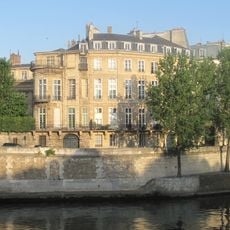
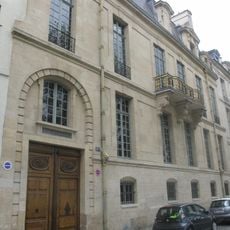
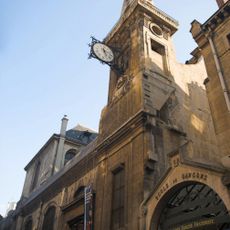
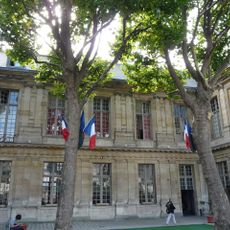
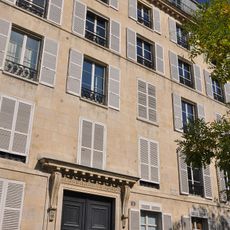
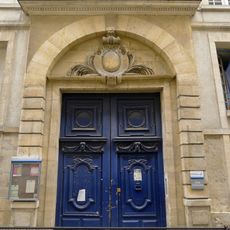
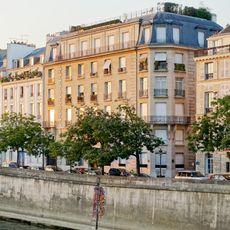
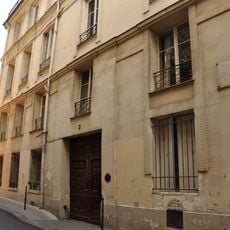
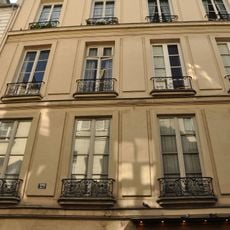
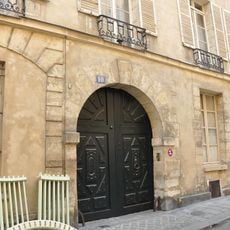
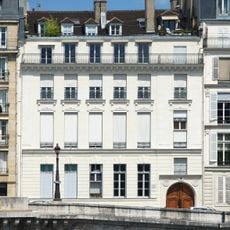
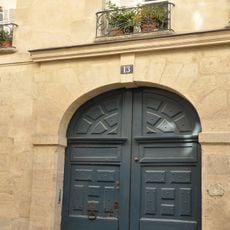
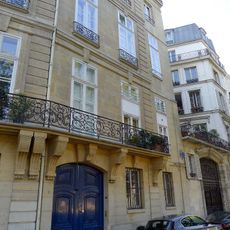
The Hôtel de Bretonvilliers survives as a single pavilion at the corner of Rue de Bretonvilliers and Rue Saint-Louis-en-l'Île. Its pale stone facade rises three levels above a large central arched passageway: three rectangular windows on the lowest level, three taller windows above, and three more beneath a rounded stone arch. A steep grey slate roof with a curved dormer and two metal finials tops it.
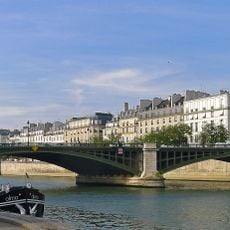
The mansion was designed between 1637 and 1642 by Jean Androuet du Cerceau for Claude Le Ragois de Bretonvilliers, a financial advisor to King Louis XIII. Most of the original structure was demolished in 1874 to make room for the Pont de Sully and Boulevard Henri IV.
The name comes from Claude Le Ragois de Bretonvilliers, secretary to Louis XIII's council, who had the mansion built. His widow Marie Accarie added embellishments during her widowhood, and Israël Silvestre engraved the garden facade facing the Seine in 1652. The Grand Gallery, 33 metres long and 8 metres high, held Sébastien Bourdon's ceiling painting of the Phaeton legend, considered his masterpiece in large-scale decoration.
The remaining pavilion received official historical monument status on April 1, 1986, protecting its architectural heritage. Visitors can view the building from outside, though access is limited to exterior viewing.
The mansion once covered about 6,000 square metres on the eastern tip of the island, and was said to be the best-situated house in Paris, with an open view over the Seine. Its Grande Galerie measured 33 metres long and 8 metres high, and its ceiling by Sébastien Bourdon showed the legend of Phaeton.
The community of curious travelers
AroundUs brings together thousands of curated places, local tips, and hidden gems, enriched daily by 93,913 contributors worldwide.