Phare de Saint-Jean-de-Luz, Maritime lighthouse in Saint-Jean-de-Luz, France.
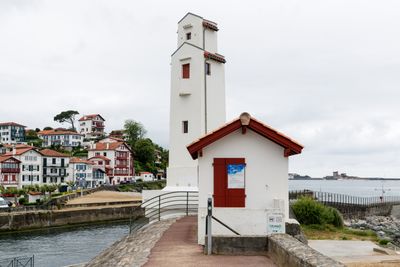
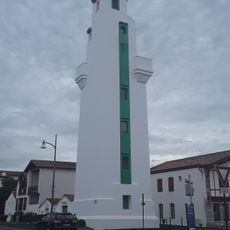
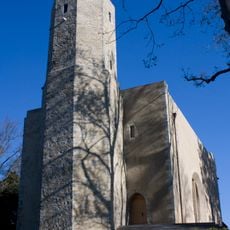
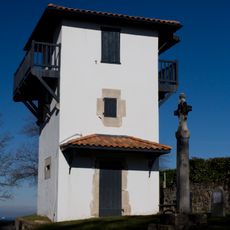
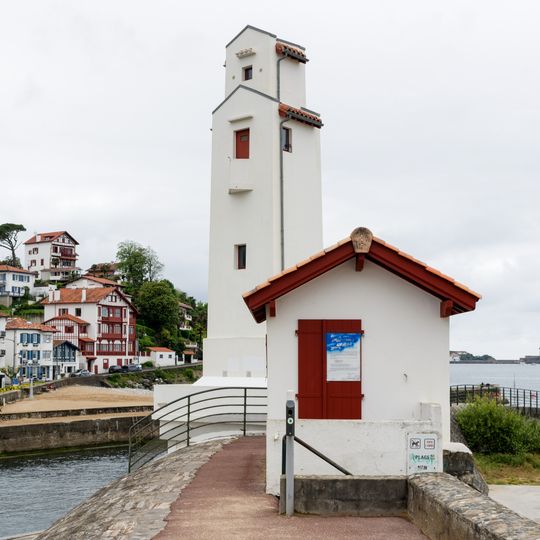
The Phare de Saint-Jean-de-Luz is a tall, tapering white lighthouse with a square cross-section, its tower marked by dark grey corner trim and red-tiled ledges at the top and middle sections. Three small windows pierce the tower, and a small white building with a red-tiled pitched roof and a red double door stands in front. It marks the entrance to the port of Saint-Jean-de-Luz.
Architect André Pavlovsky built this navigation structure in 1936 to guide ships through the Bay of Biscay. The construction took place during a time when modern harbor improvements aimed to increase maritime safety.
The lighthouse reflects the fishing traditions of the French Basque Country and remains a symbol of the strong connection between the harbor and the community. Locals and visitors appreciate it as a landmark that keeps maritime heritage visible in daily life.
The Phare de Saint-Jean-de-Luz marks the entrance to the port where the Urdazuri river meets the bay, facing its twin in Ciboure. A metal handrail curves along the path at its base, past a small building with a red-tiled roof and a red double door bearing a "PLAGE" sign. The tower is seen from outside; no interior visit is described.
The Saint-Jean-de-Luz tower was designed by architect André Pavlovsky together with its twin at Ciboure, on the opposite bank of the Urdazuri where the river meets the bay. The two lighthouses face each other across the water, and the Saint-Jean-de-Luz one is the downstream light marking the harbour entrance. Both were listed as monuments historiques on 8 October 1993.
The community of curious travelers
AroundUs brings together thousands of curated places, local tips, and hidden gems, enriched daily by 92,947 contributors worldwide.