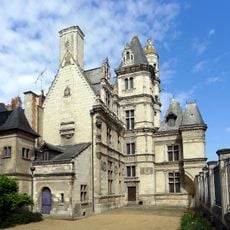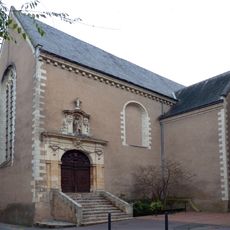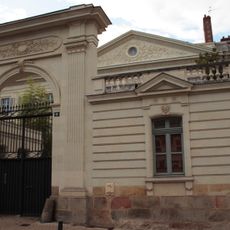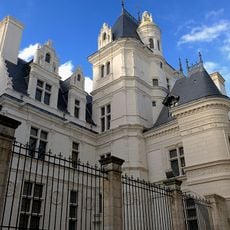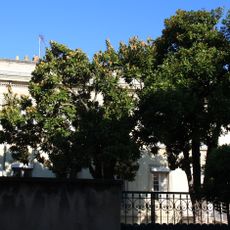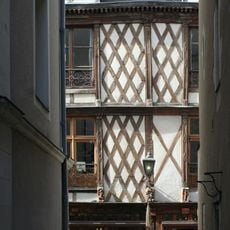
Muséum d'histoire naturelle d’Angers, Natural history museum on rue Jules Guitton, Angers, France
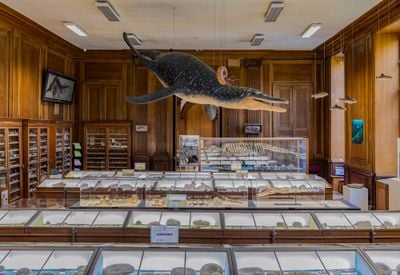
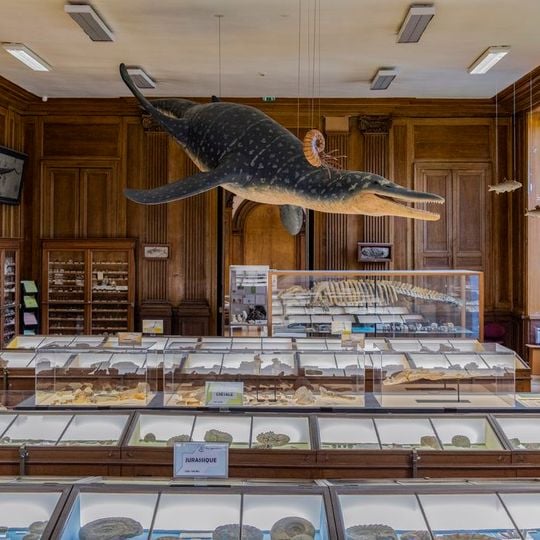
The Muséum d'histoire naturelle d'Angers is a natural history museum located on Rue Jules Guitton displaying preserved birds, insects, large mammals, and geological and botanical specimens. The rooms are arranged across several floors to showcase biodiversity through carefully prepared animal remains and mineral collections.
The institution was founded in the early 1800s and gradually became a center for research and public display of natural specimens. It received official designation as a Musée de France in 2003, marking an important recognition of its role.
The museum's name distinguishes it from Angers' art museums, called Musées d'Angers. Its founding core came from collections seized during the Revolution, gathered by Gabriel Éléonore Merlet de la Boulaye from 1790. The Society of Scientific Studies of Anjou (SESA) was created in 1871 by scholars closely tied to the museum, and its herbaria moved with the museum's botanical collections to the Arboretum Gaston Allard in 1964.
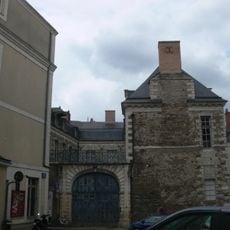
The museum occupies the Demarie-Valentin house, where the zoological collections were installed in 1958 and opened to the public on 29 April 1963. The entrance is the arched doorway at number 49, marked by a carved animal head above the arch and a "MUSEUM" inscription; a banner to the left gives the address www.museum.ville-angers.fr. Opening hours are posted on the white sign beside the door.
The 12 fossil fish from Monte Bolca, brought from Italy by Bonaparte in 1797, still carry their original labels. The museum also holds a Holzmaden ichthyosaur cast bought in 1885 from the Cantonal Museum of Geology in Lausanne, where the original remains.
The community of curious travelers
AroundUs brings together thousands of curated places, local tips, and hidden gems, enriched daily by 92,924 contributors worldwide.