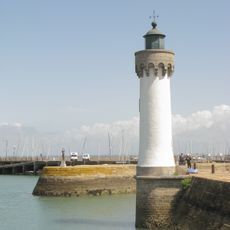
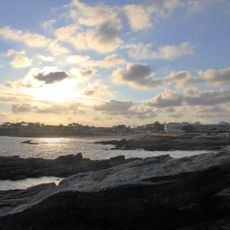
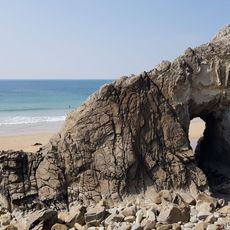
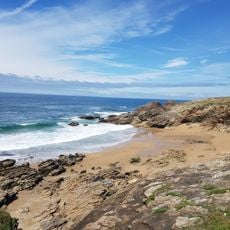
Pointe du Conguel, Protected cape at the southern end of Quiberon peninsula, France.
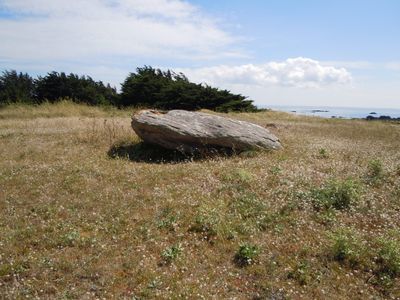
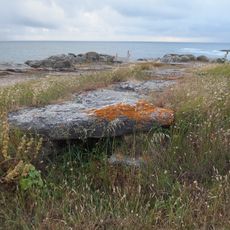
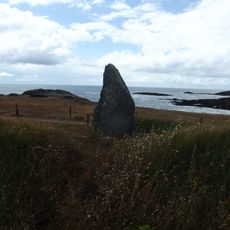
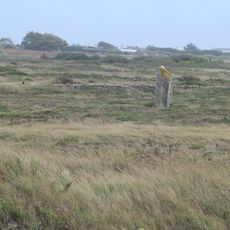
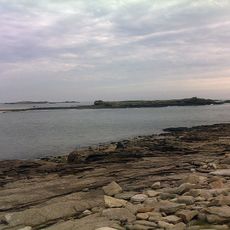
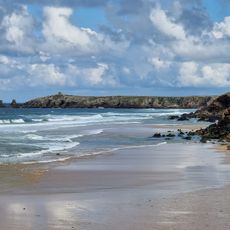
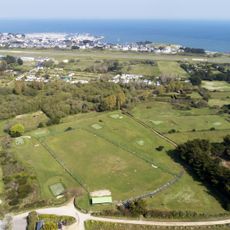
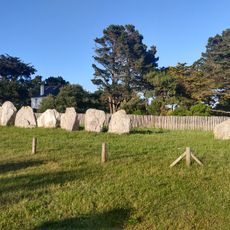
Pointe du Conguel is a 1 km long, 200 m wide peninsula at the south-eastern end of the Quiberon peninsula, in the commune of Quiberon. It began as an island of rocks joined by accumulated sand and is now attached to the mainland by a 300 m tombolo. A coastal path circles the site, which the Conservatoire du littoral protects; geologists note sheets of foliated granite with a slight westward dip.
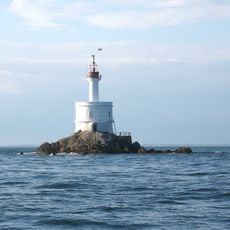
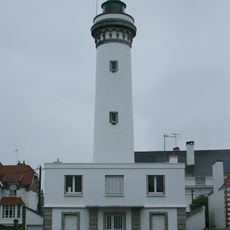
The point was originally an island of rocks joined by accumulated sand, later linked to the mainland by a 300-metre tombolo. Two islets extend it: Toul Bihan, reachable on foot at spring tides, and Toul Bras, where Gaulish burials were found. Offshore, the Teignouse lighthouse marks the Teignouse passage, near which the battleship France sank on 22 August 1922 at 3:15, holed by a rock.
The name Conguel probably comes from the Latin concha, meaning shell, a word also behind the French conque for a sheltered harbour anchorage. A commemorative plaque on a rock at the point recalls the Quiberon mid-air collision of 30 July 1998 on a Lyon–Lorient flight, in which 15 people died, 12 of them passengers.
Access varies with the season and weather, especially during storms and high tides when paths become unsafe. Sturdy shoes with good grip are essential, as routes along the cliffs can be narrow and slippery.
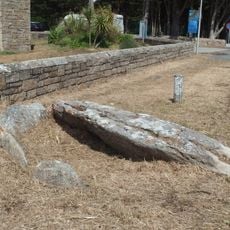
A commemorative plaque on one of the point's rocks recalls the Quiberon mid-air collision of 30 July 1998, when a Lyon–Lorient flight went down and 15 people died, 12 of them passengers. The memorial is easy to miss among the low granite slabs and dry grass.
The community of curious travelers
AroundUs brings together thousands of curated places, local tips, and hidden gems, enriched daily by 93,683 contributors worldwide.