Ancienne piscine du Touquet-Paris-Plage, Art Deco swimming center in Le Touquet-Paris-Plage, France
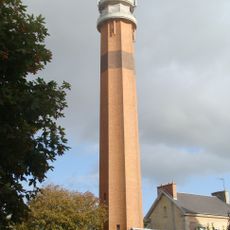
The former swimming pool of Le Touquet-Paris-Plage stood on the digue-promenade facing rue Saint-Jean, built into the beach below the promenade so as not to block the view from the villas. Its basin measured 66.66 m by 25 m and held 2,700 m³ of sea water, with a small and a large bath arranged across the width like the beach itself; the large bath was 2.50 m deep and included a 5 m diving pit. The monumental diving tower had two columns, one holding the stairs to the 1 m, 3 m, 5 m and 10 m boards, the other concealing the chimney of a heating plant 120 m away. The pool was demolished in the 1980s; only Louis Quételart's 1949 diving tower remains, now standing beside the Aqualud water park that replaced it in 1985.
Built from 1929 at the initiative of mayor Léon Soucaret to plans by architect André Bérard, the pool opened on 28 May 1931 and was immediately called "the most beautiful pool in Europe". Its basin measured 66.66 m by 25 m, with a 5 m diving pit, and the stands held up to 1,800 spectators. German forces destroyed the diving tower in October 1943; Louis Quételart rebuilt it in 1949. The pool was demolished in the 1980s, and the Aqualud water park replaced it in 1985, keeping only the tower.
The pool was built so bathers could swim with a wide view of the sea, and its 500 cabins, 400 with footbaths, and 20 seawater baths served the elegant clientele of the resort. From the 1950s to the 1970s, schoolchildren of Le Touquet took their swimming and lifesaving certificates here. Today only Louis Quételart's 1949 diving tower remains, facing the beach.
The pool itself no longer exists: it was demolished in the 1980s and replaced in 1985 by the Aqualud water park, so only the 1949 diving tower by Louis Quételart survives. It stands on the digue-promenade, opposite rue Saint-Jean, at the edge of the beach below the promenade. Look for the tower from the sand and the seawall; the structure is listed in the general inventory of cultural heritage since 5 December 1996.
The original diving tower was split into two separate structures: one containing the access stairs and another concealing the boiler room chimney. This dual-tower design was an unusual solution for the time, reflecting careful planning that blended function with the building's visual composition.
The community of curious travelers
AroundUs brings together thousands of curated places, local tips, and hidden gems, enriched daily by 94,660 contributors worldwide.