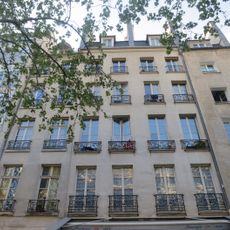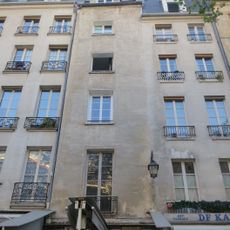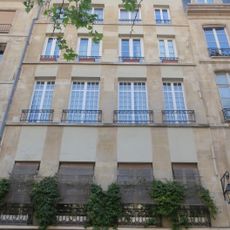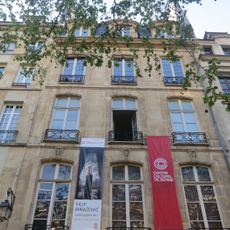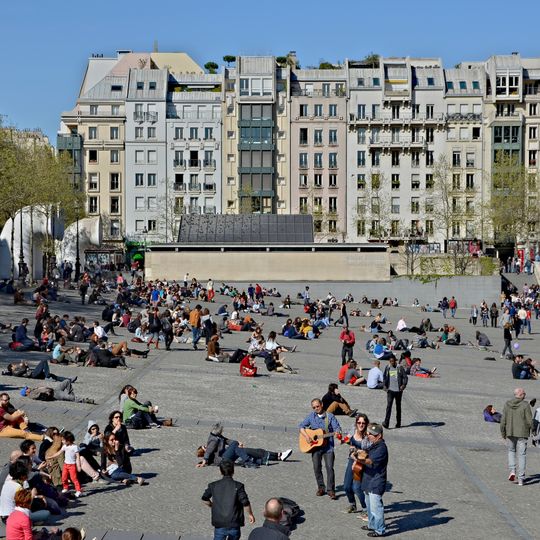
Place Georges-Pompidou, square in Paris, France
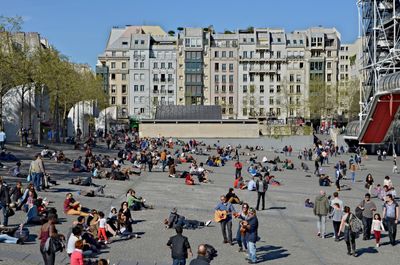
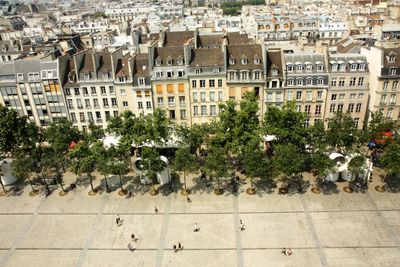
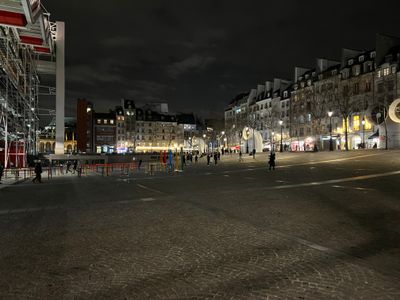
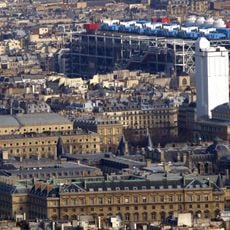
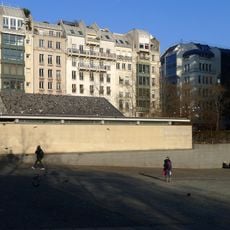
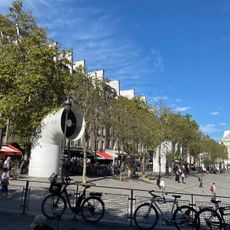
Place Georges-Pompidou is a pedestrian square in the 4th arrondissement adjacent to Centre Pompidou, with a distinctive sloped design that descends from street level toward the cultural center's entrances below. The paved surface accommodates free movement and features art installations and sculptures throughout the space.
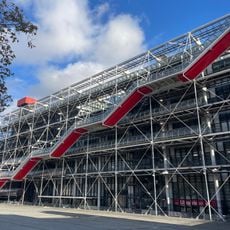
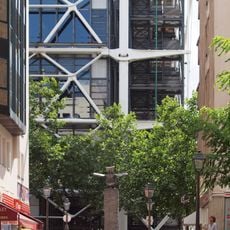
The area was formerly part of the medieval Beaubourg neighborhood with narrow streets and small buildings, but was demolished in the 1930s and converted to a parking area. When architects Renzo Piano and Richard Rogers designed the Centre Pompidou in the 1970s, the square took its current form as an integral part of the cultural complex.
The square is named after French president Georges Pompidou but locals typically call it by the neighborhood name, Beaubourg. The space functions as a stage for street performers, musicians, and artists who fill the square throughout the year, making it an open platform where the city's creative life unfolds naturally.
The square is fully pedestrian-friendly with areas for walking and sitting, though the sloped design means some areas can be slippery in wet conditions. Access from the street level allows easy entry from multiple points around the perimeter.
The square's design was inspired by Piazza del Campo in Siena, Italy, with its distinctive sloped form and compact layout creating a unique spot in Paris. This influence allowed the entire cultural project to fit within a small footprint while remaining easily navigable.
The community of curious travelers
AroundUs brings together thousands of curated places, local tips, and hidden gems, enriched daily by 91,382 contributors worldwide.