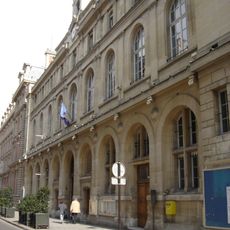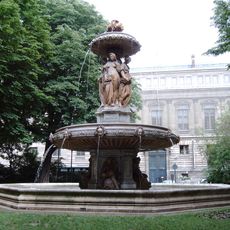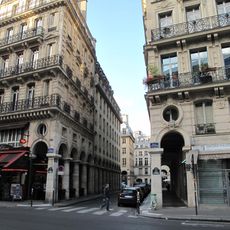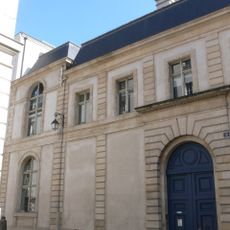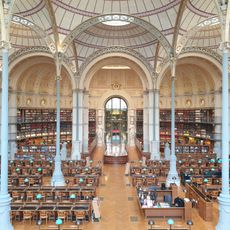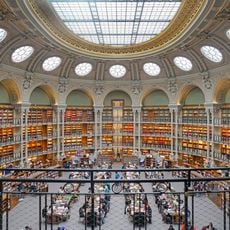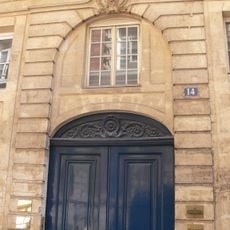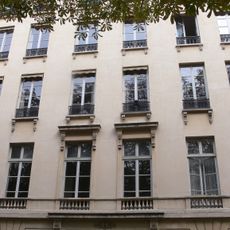
Rue Vivienne, street in Paris, France
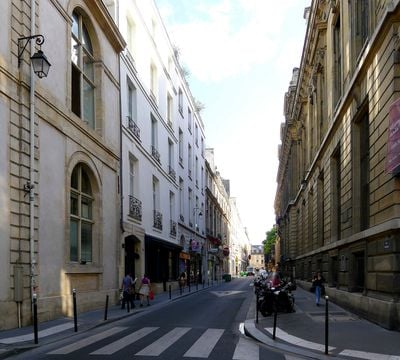
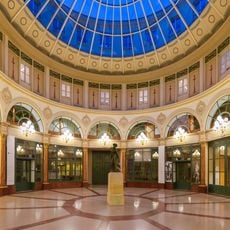
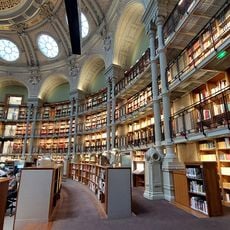
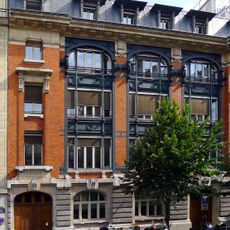
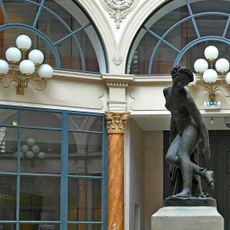
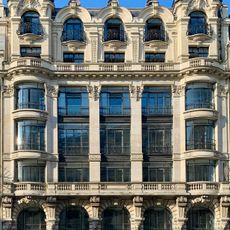
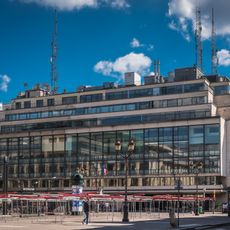
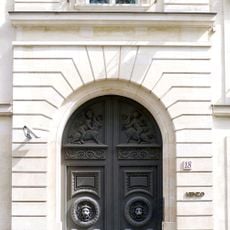
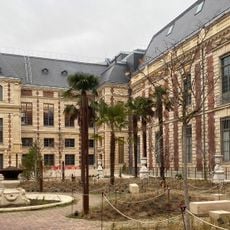
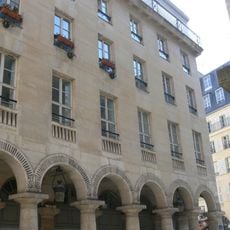
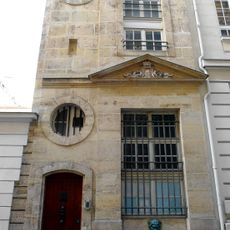
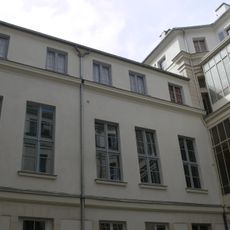
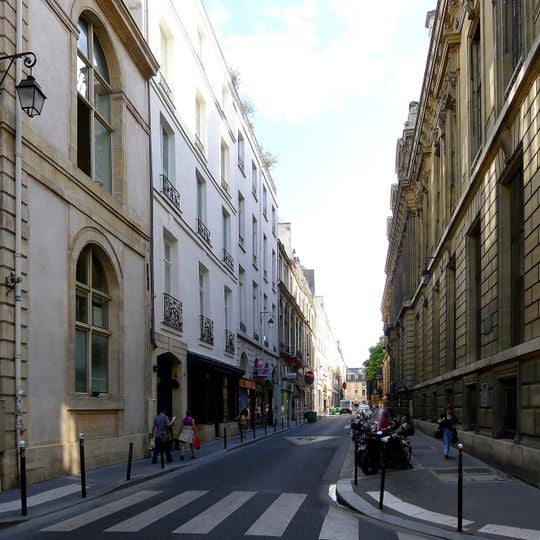
Rue Vivienne is a street in central Paris stretching about 640 meters through the 2nd arrondissement, with a width of 13.5 meters and historic buildings lining both sides. The street features shops, cafes, and the covered Galerie Vivienne with its shops and arcades, creating a quiet shopping passage alongside standard street commerce.
Rue Vivienne was developed around 1600 and takes its name from the Vivien family who owned land in this area. During the 1800s the street became famous for masked balls and social gatherings, while serving as Paris's financial center with numerous banks and offices.
Rue Vivienne has long been a place where commerce and creative activity intersected. Today you can see how the street functions in daily life through its shops, cafes, and galleries, revealing how people have used this space across different periods of Paris's development.
The street is easily reached via Bourse and Grands Boulevards metro stations and sits centrally between Petits-Champs and Rue Quatre-Septembre. Walking here is pleasant with good foot space, and many nearby cafes and restaurants provide comfortable spots to stop along the way.
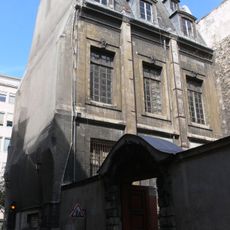
A plaque on this street honors Édouard-Léon Scott de Martinville, an early sound recording inventor whose pioneering work is often overlooked by visitors. Similarly, a memorial marks the former home of the poet Lautréamont, whose intense literary contributions shaped French writing.
The community of curious travelers
AroundUs brings together thousands of curated places, local tips, and hidden gems, enriched daily by 92,764 contributors worldwide.