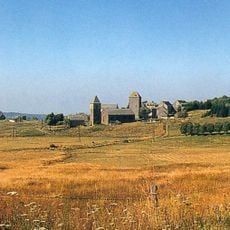
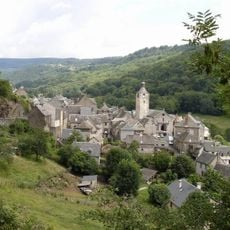
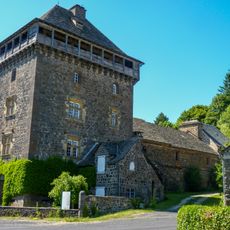
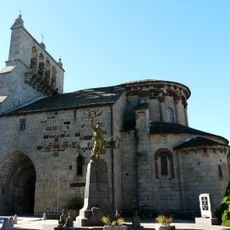
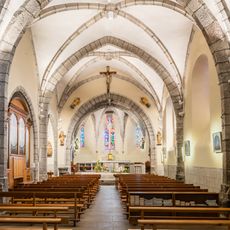
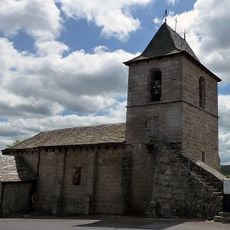
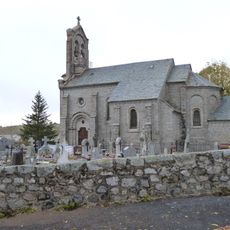
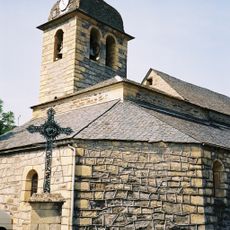
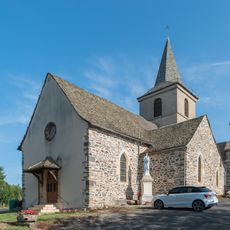
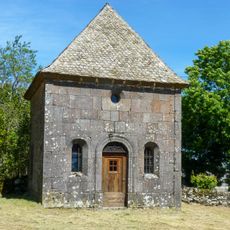
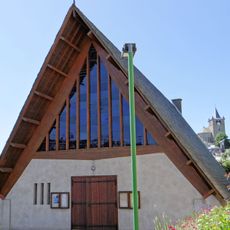
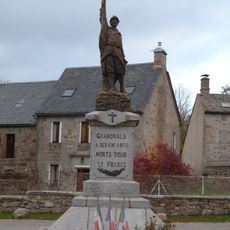
Église Notre-Dame-des-Pauvres, Romanesque church in Aubrac, Saint-Chély-d'Aubrac, France
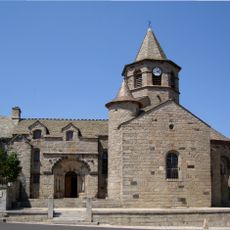
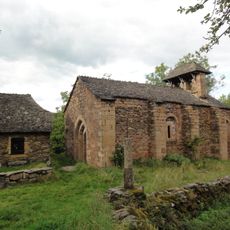
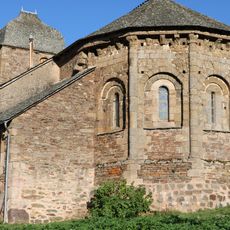
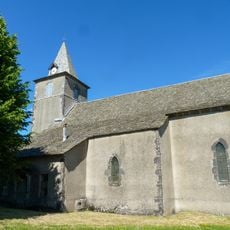
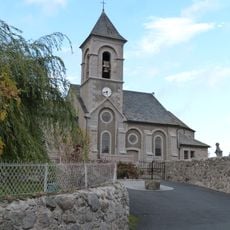
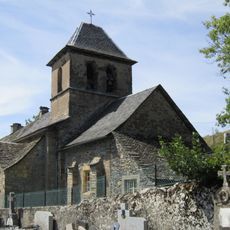
Église Notre-Dame-des-Pauvres is a Romanesque church on the edge of Aubrac hamlet, in Saint-Chély-d'Aubrac. Its rectangular plan measures 24 by 12 metres without a transept. The single nave has arcade buttresses and a broken barrel vault; the flat chevet is the only one of its kind in Aubrac's medieval architecture. The north wall is blind, while the other walls have small windows.
The sources give no written record of the church's beginnings: Jacques Bousquet proposed a start of works in 1162, while Étienne Hamon dates the oldest masonry to 1180–1200. It is first documented in 1216 as "ecclesia Beate Marie de Albrac". Fortified in 1388–1389 during the Hundred Years' War, it received its present bell tower between 1453 and 1468.
The church served the hospital of Aubrac, a stopping point for pilgrims on the route to Santiago de Compostela, and its name honours the poor received there. The bell tower holds the "cloche des perdus", whose Latin inscription asks Mary to call back those who have strayed. The tower also housed the bell-ringer's lodging with a bread oven.
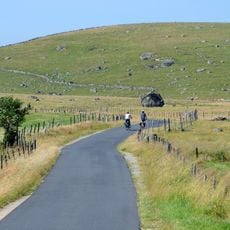
The location sits at 1310 meters elevation in the high Aubrac plateau region and is accessible on foot from the village center. The church is one of few gathering places in this elevated rural area of Aveyron.
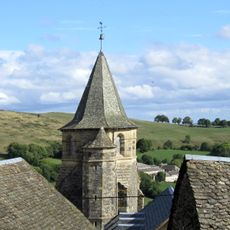
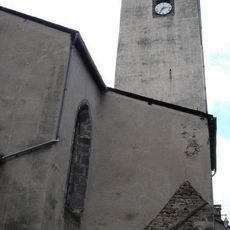
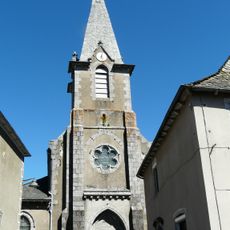
The bell tower, built between 1453 and 1468, replaced an older bell tower or campanile from the hospital's early days. Rooms were fitted inside it from the start because the monastery buildings lacked space, and it housed the bell ringer's lodging with a bread oven. Its bell, called "la cloche des perdus", carries a Latin inscription asking Mary to call back those who have strayed.
The community of curious travelers
AroundUs brings together thousands of curated places, local tips, and hidden gems, enriched daily by 92,885 contributors worldwide.