Église Saint-Sauveur de Nevers, church located in Nièvre, in France
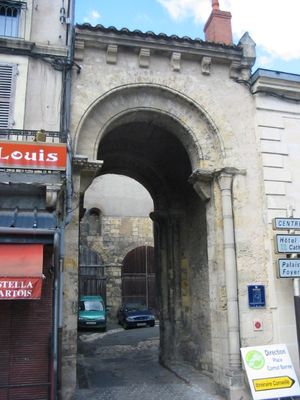
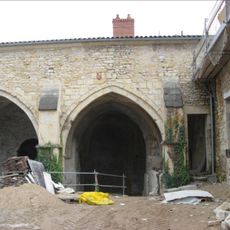
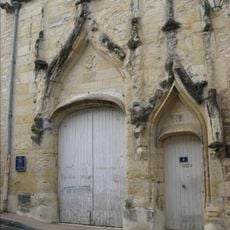
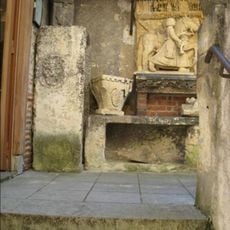
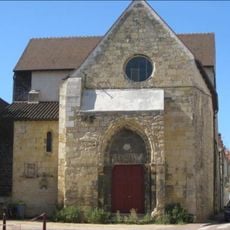
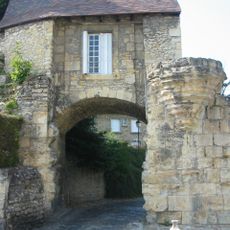
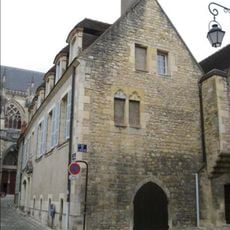
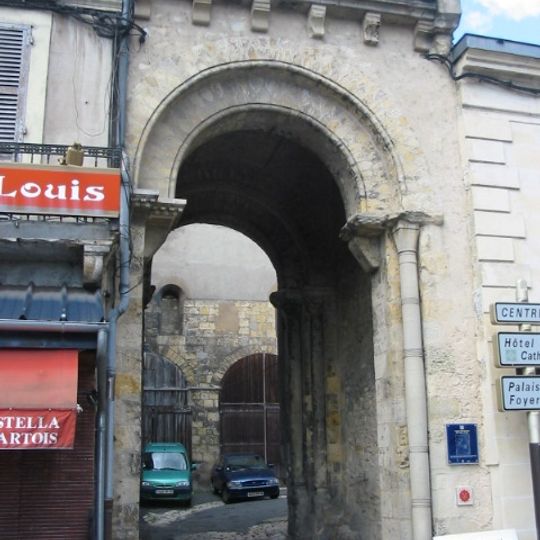
Église Saint-Sauveur de Nevers survives only as ruins: a double side portal still in place, a carved tympanum, and a few capitals and corbels. The tall stone archway, built of light gray and cream masonry blocks, rests on pillars, its right pillar carrying a rounded molding; projecting stone brackets line the top edge above the curve, and a blue plaque with a small red sign sits near the base on the right. The opening leads into a dark passage.
A monastery existed here by 888, when Charles the Fat confirmed it among the possessions of the Church of Nevers. A fire destroyed it in 1039, and in 1045 Bishop Hugues II de Champallement gave it to Cluny, the first Cluniac house in the Nièvre. The church was dedicated in 1076 and became a priory by 1109. It passed to the bishop's seminary in 1709 and was almost entirely demolished in 1838.
The name Saint-Sauveur (Holy Saviour) recalls the monastery confirmed among the goods of the Church of Nevers in 888 as abbatia sancti Salvatoris. Cluniac monks settled here from 1045, and the church was dedicated in 1076. The carved tympanum and capitals once kept in the Porte du Croux museum were singled out by Mérimée and Viollet-le-Duc in the second half of the 19th century.
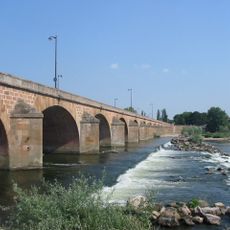
The remains stand on Place Mossé, by the quays at the entrance to the Loire bridge, facing the river crossing. The site is accessible every day. The double side portal, the carved tympanum and the corbels are outdoors; further Romanesque fragments are kept in the Porte du Croux museum and the ARKO art gallery.
The community of curious travelers
AroundUs brings together thousands of curated places, local tips, and hidden gems, enriched daily by 94,583 contributors worldwide.