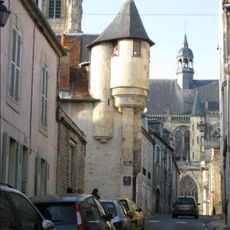
Église Notre-Dame de Nevers, church located in Nièvre, in France
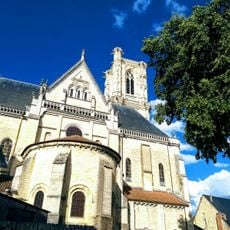
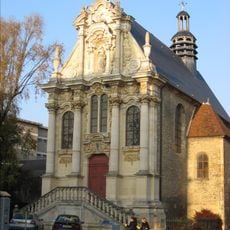
Église Notre-Dame de Nevers, also called Saint-Genest, is a 12th-century Romanesque church on rue Saint-Genest. Its steep gabled stone facade has a round window, a pale stone panel, and a pointed-arch doorway with a dark red double door. The nave has two levels: large arcades and high windows.
Built in the 12th century as the parish church of Nevers' faïence makers, Saint-Genest was deconsecrated during the Revolution. In the 19th and 20th centuries it served as a brasserie, a wine warehouse and finally a garage. In 1836 a large part of the choir was cut away to widen the street.
The church is also known as Saint-Genest and served the parish of Nevers' faïence makers, the potters and enamellers whose trade shaped the district. The south portal, praised by Viollet-le-Duc for its proportions and sober sculpture, carries a lintel that Prosper Mérimée described as a much-mutilated procession of saints.
The church stands on rue Saint-Genest, its gabled stone facade facing a paved area; the south portal, praised by Viollet-le-Duc, is the detail to seek out. The building is deconsecrated and has served as a brasserie, wine store and garage, so do not expect an open interior or regular visiting hours. Part of the choir was cut away in 1836 when the street was widened, so the plan is shorter than the original.
The south portal was called a masterpiece by Viollet-le-Duc for its proportions and the sobriety of its sculpture; Prosper Mérimée described its drawing, whose heavily damaged lintel showed a procession of saints. At the crossing, corbels carved as human or monstrous heads once carried a dome; their hollow pupils were filled with coloured mastic, black enamel or lead.
The community of curious travelers
AroundUs brings together thousands of curated places, local tips, and hidden gems, enriched daily by 94,658 contributors worldwide.