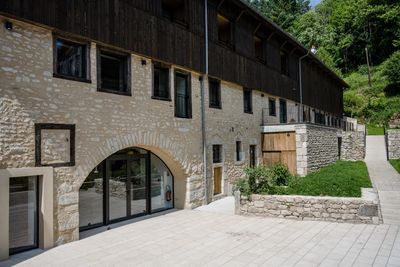
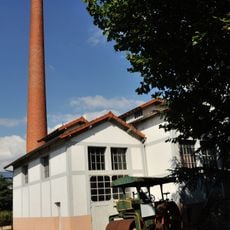
Moulin Richard de Bas, Paper mill museum in Ambert, France.
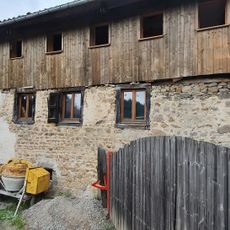
Moulin Richard de Bas is a paper mill in Ambert that uses water-powered machinery to transform cloth scraps into handmade sheets. The site displays original spaces where production unfolds step by step, from preparing raw materials to drying finished paper.
The mill is documented from 1326 and takes its name from the Richard family of papermakers active in the 15th century, "Bas" distinguishing the lower of six buildings stepped along the millrace. Until 1850 hides were tanned here; from then on rags were used to make paper pulp. Abandoned after the death of its occupant Claude Chantelauze, it was bought in 1940 by Marius Péraudeau, who opened it to visitors from 1945 and founded the historical paper museum in 1943.
The name comes from the Richard family of papermakers in the 15th century, while Bas distinguishes this building from the six structures stepped along the millrace. Since 1945 the mill has opened to visitors, and Marius Péraudeau, who bought it in 1940, worked with artists such as Salvador Dalí, Bernard Buffet and Foujita, whose works were printed on its sheets.
Visitors can join workshops to make paper themselves or browse exhibitions showing techniques and history. The place is easy to access and also has a shop selling handmade paper products.
The mill's paper was used for the copperplate engravings of Diderot and d'Alembert's Encyclopédie, printed on Auvergne paper while the text used paper from elsewhere. Between 1958 and 1960 the mill supplied the 150 sheepskin parchments, chosen from 300,000 skins, for a single copy of the Apocalypse of Saint John, bound in bronze by Salvador Dalí.
The community of curious travelers
AroundUs brings together thousands of curated places, local tips, and hidden gems, enriched daily by 92,885 contributors worldwide.