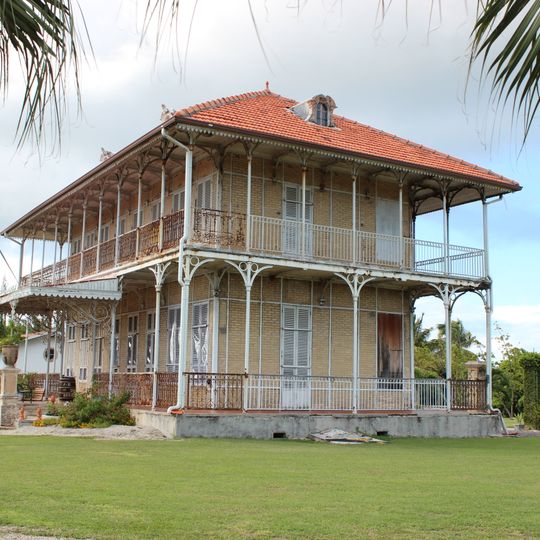
Habitation Zévallos, Colonial agricultural estate in Le Moule, Guadeloupe
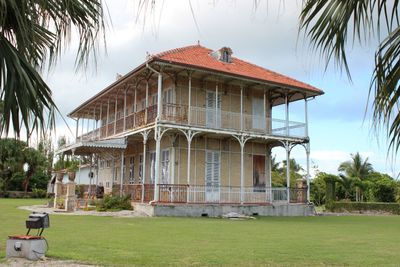
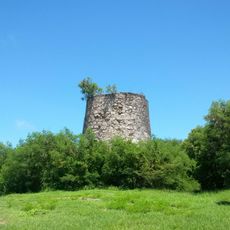
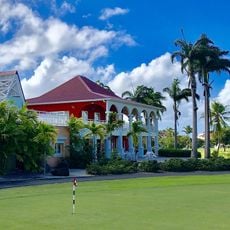
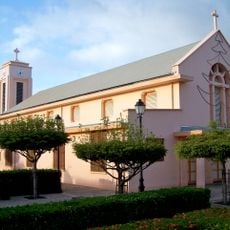
Habitation Zévallos is a former sugar estate whose director's house, built between 1868 and 1871 from prefabricated elements, has a two-story gallery with slender columns and curved braces. The tan brick or stone walls are topped by a hipped roof of orange-red tiles with a small dormer. The 2.3-hectare grounds also hold the industrial chimney of the old sugar works.
The estate began in the early 1700s as a sugar cane plantation and expanded through marriages between wealthy families. During the 1800s, industrial structures appeared on the grounds that modernized sugar production.
The architecture shows European influences tied to the island's colonial past. Visitors can see how design elements from different continents came together in a single building.
The estate lies along Route Nationale 5, at the junction with the Route de la Porte-d'Enfer, 4 km southeast of Le Moule town centre. The ground floor of the colonial house and the two-hectare grounds can be visited from Wednesday to Saturday. The house stands on a two-metre-high crawl space reached by a trapdoor in the garden, built as shelter from cyclones.
The director's house was built between 1868 and 1871 from prefabricated elements shipped as kits. According to some historians, the ironwork came from Gustave Eiffel's workshops, though this origin remains disputed; the parts were reportedly made for a Louisiana cotton planter who intended them for his twin daughters, and were bought at auction in Guadeloupe after the ship carrying them was damaged at Pointe-à-Pitre.
The community of curious travelers
AroundUs brings together thousands of curated places, local tips, and hidden gems, enriched daily by 93,174 contributors worldwide.