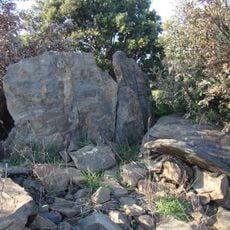
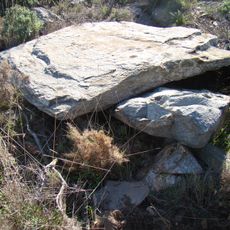
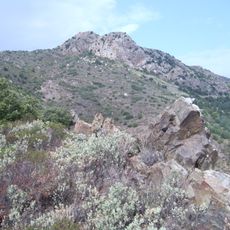
Dolmen de la Coma Enestapera, Neolithic dolmen near Cerbère, France
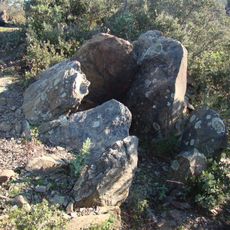
The Dolmen de la Coma Enestapera is a Neolithic burial chamber built from slate stones stacked together. The structure consists of supporting stones topped with a large capstone that has remained in place for millennia.
This megalithic structure was likely built during the third or fourth millennium BCE by early mountain inhabitants. It was designated a protected historical monument in 1889, recognizing its importance for understanding prehistoric life.
The monument marks an ancient burial place where early communities honored their deceased with stone structures. It reflects how people in this mountain region lived and remembered their dead thousands of years ago.
The monument sits in a wooded area reachable by following marked hiking paths from nearby forest roads. Visitors should wear sturdy footwear as the terrain is natural and uneven.
The dolmen was long forgotten despite its 1889 listing as a monument historique; Pierre Ponsich rediscovered it and published it with a plan in his 1950 inventory of Roussillon dolmens. Excavations in 1963 by Ponsich and Abélanet found only charcoal, glazed and hand-modelled pottery fragments, an unidentifiable metal tool, iron shoe nails and a small flint flake.
The community of curious travelers
AroundUs brings together thousands of curated places, local tips, and hidden gems, enriched daily by 94,465 contributors worldwide.