Archeological Garden of Saint-Acheul, Archaeological site in Amiens, France.
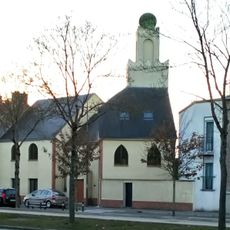
The Archeological Garden of Saint-Acheul is a site with walking paths and displays showcasing discoveries from the Stone Age settlements in the Somme valley. The grounds feature exhibition spaces and a tower offering views across the surrounding landscape.
In 1854 Adolphe Dutilleux collected flint bifaces from the Quaternary deposits here. On 27 April 1859 Joseph Prestwich and John Evans extracted a biface in place and photographed it, a document shown in London and Paris that helped establish the antiquity of man. Albert Gaudry's excavations that year led to the founding of Prehistory as a discipline, and in 1872 Gabriel de Mortillet named the Acheulean after this site.
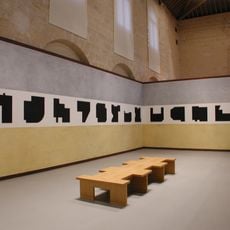
The name Acheulean comes from this Amiens district, coined by Gabriel de Mortillet in 1872 for Lower Palaeolithic flint tools like those found here. In the Salle Victor Commont at the entrance, educational workshops demonstrate flint knapping and fire-making, and didactic panels with prehistoric objects trace two million years of tool techniques.
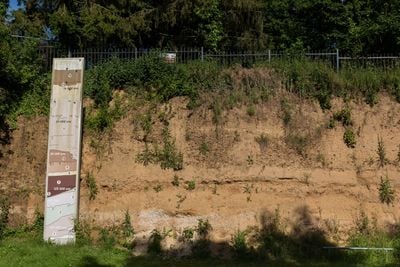
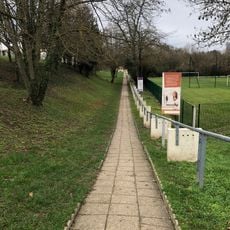
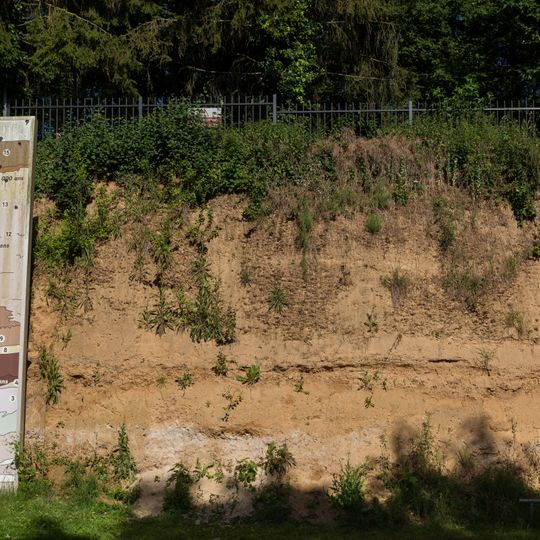
Access is via the rue de Boutillerie, southeast of Amiens on the alluvial terrace above the Somme and Avre confluence. A path lined with explanatory panels on human evolution leads to the geological section, the site's main feature. The Victor Commont room at the entrance hosts flint-knapping and fire-making workshops, and a tower overlooks the grounds.
The 60-metre geological section exposes sediment layers accumulated over 450,000 years, and it also shows the bed of the Somme shifting northward over time. A thick layer of loess in the cut records cold phases of the Quaternary. The section is a protected monument historique, classified by decree of 19 August 1947.
The community of curious travelers
AroundUs brings together thousands of curated places, local tips, and hidden gems, enriched daily by 93,527 contributors worldwide.