Augustobona, Roman archaeological site in Troyes, France
Augustobona is a Roman archaeological site buried beneath the modern city of Troyes, containing foundations of ancient structures and urban layouts from antiquity. The excavations reveal the spatial arrangement of former streets and buildings, showing how the settlement was once organized.
Augustobona was founded in the late 1st century BCE as the capital of the Tricasses, a Gallic tribe, and was laid out on a grid plan. It grew to about 80 hectares, stretching 2 km east-west and 400 m north-south along the Seine and the Via Agrippa. In 356 the future emperor Julian took refuge in its fortress from the Alemanni. By the late 4th century it was renamed Civitas Tricassium and reduced to a walled area of about 16 hectares.
The site preserves traces of Roman daily life, including remains of public baths and a water distribution system that served the settlement. These structures reveal how residents organized their community and lived together.
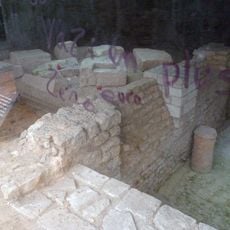
The excavated remains under the Porte de Chaillouet, on the site of the former municipal slaughterhouse demolished in 1986, are conserved and can be visited. Look for the geometric mosaics and wall paintings from a house built in the 1st century. The site lies beneath the modern city centre, so access is on foot.
Under the Porte de Chaillouet, excavated after the municipal slaughterhouse was demolished in 1986, two Roman insulae survive with geometric mosaics, wall paintings and hypocaust heating; a hoard of 186,000 coins was found there. Parts of the ruins are conserved and can be visited.
The community of curious travelers
AroundUs brings together thousands of curated places, local tips, and hidden gems, enriched daily by 93,922 contributors worldwide.