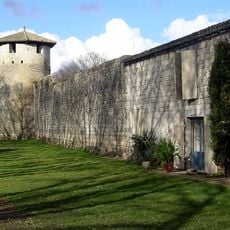
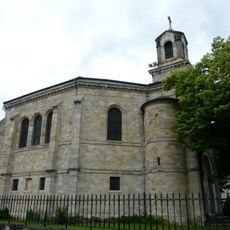
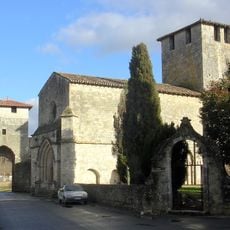
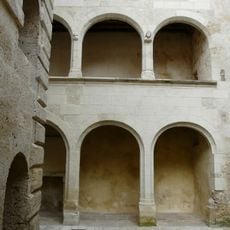
Moulin d'Henry IV, Historical watermill in Nérac and Barbaste, France.
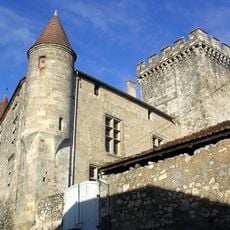
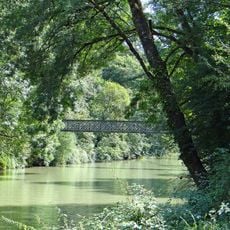
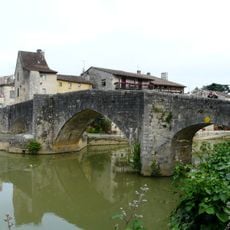
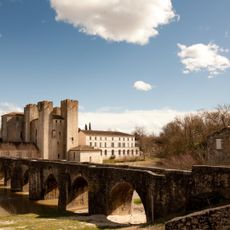
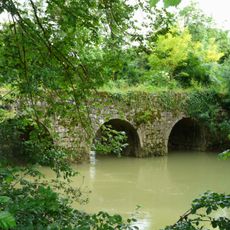
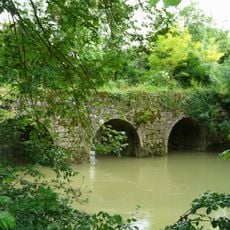
Moulin d'Henry IV stands on the right bank of the Gélise, 1,000 metres from its confluence with the Baïse. Its square central body is flanked by four square towers, the tallest reaching 29 metres, and rises six storeys above the wheel level. A stone bridge with three arches crosses the water 20 metres downstream of the highest tower.
The mill was built at the end of the 13th century by the Lavardac and Bordes families, as shown by sales of shares to Amanieu VII d'Albret in 1308 and 1309. During the Wars of Religion it served more as a castle than a mill; Henri de Navarre passed through and called himself lou moulié de Barbasto. It was classified as a monument historique in 1889, damaged by fires in 1907 and 1937, and restored in 1947.
Henri de Navarre, who called himself "lou moulié de Barbasto", passed the towers on his way from Nérac castle to his hunting park at Durance. In 1571 Carbon de Faulong was named commander of the Towers of Barbaste, and during the Wars of Religion the towers served more as a castle than a mill.
The mill stands at the north-western edge of Nérac, where the communes of Lavardac and Barbaste meet, on the right bank of the Gélise. The bridge of Barbaste crosses the river about 20 m downstream of the tallest tower, so the building is seen from the road before it is reached. The structure rises six floors above the wheel level, and the towers reach 29, 26 and 27 m.
The mill's tallest tower reaches 29 metres, and the bridge beside it already existed in 1259, when it appears in the homage of Ysarn de Sainte-Marise to the count of Toulouse. The mill controlled passage over that bridge, standing 20 metres downstream of the tower.
The community of curious travelers
AroundUs brings together thousands of curated places, local tips, and hidden gems, enriched daily by 93,137 contributors worldwide.