Château de Carol, Castle ruin in Porta, Pyrénées-Orientales, France
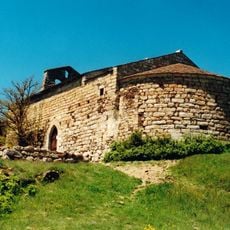
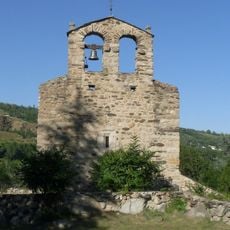
Château de Carol is a ruined fortress on a steep rock above Porta, in the Pyrénées-Orientales. Two square towers of the upper enclosure survive: the better-preserved one is 10 metres high and 4 metres wide at the base, built of large stones with arrow slits and crenellations. About 12 metres away stands the second tower, more rectangular in plan, its north face collapsed. Below, the outer wall keeps a round-arched doorway.
The site of Querol is documented from 1011, but the castle itself first appears on 2 January 1243, when James I of Aragon issued a document at Puigcerdà. Its two square towers date from the 12th or 13th century, the outer wall came later. Held by James III of Majorca, it submitted to Peter IV of Aragon in 1344 with a garrison of five men; a 1399 inventory listed two bombards and some ten crossbows. Occupied by the French in 1463, it was returned to Ferdinand II in 1493 and demolished by the French after the Treaty of the Pyrenees.
The castle is also called castell de Querol, after the village of Querol in the commune of Porta. The best-preserved tower, 10 metres high and four metres square, is said to have served as a pigsty in the early 20th century. Access is via Carrer del Castell, climbing from the village centre.
The ruins are freely accessible without entrance fees and can be reached on foot from a nearby parking area. Visitors should be careful as some walls are crumbling or slippery and proper footwear along with water during midday hours is recommended.
The better-preserved tower stands 10 metres high on a four-metre square base, with three levels, loopholes and a crenellated top. Locals say it served as a pigsty in the early 20th century. A 1775 plan of the château de Carol shows an isolated two-storey building with three towers.
The community of curious travelers
AroundUs brings together thousands of curated places, local tips, and hidden gems, enriched daily by 93,318 contributors worldwide.