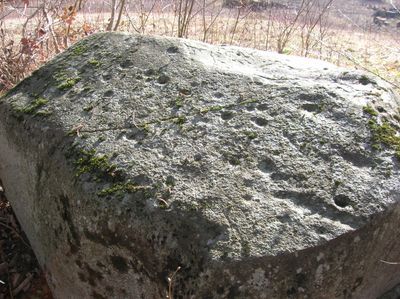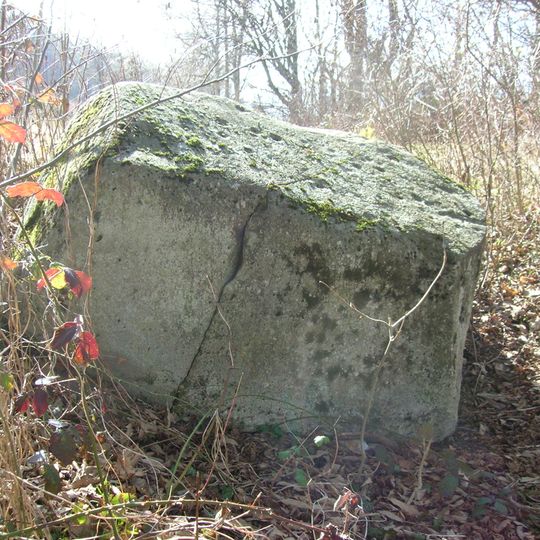
Pierre du Bigot, Cup-marked glacial erratic in Saint-Martin-d'Hères, France
This pink granite block measures about 2 meters long and 1.5 meters high with roughly 46 cup marks carved into its flat surface. The boulder has naturally rounded edges from being moved by ice age glaciers.
An archaeologist discovered this prehistoric stone in 1911 and shared the findings with the French Prehistoric Society. The discovery showed that this area had been inhabited since early Neolithic times.
The cup marks on the stone come from the Neolithic period and show that early people lived in this area. These markings suggest ritual or practical activities took place thousands of years ago.
The stone sits on private land in the Bigot hamlet on Mûrier Hill and can be reached by walking paths. Using marked trails and respecting private property makes for a better visit.
Hippolyte Müller reported the find to the French Prehistoric Society on 23 March 1911, eleven days after spotting the stone. The block was later displayed at the Musée dauphinois in Grenoble. Müller gave its volume as four cubic metres, with 46 cup marks cut into the flat face.
The community of curious travelers
AroundUs brings together thousands of curated places, local tips, and hidden gems, enriched daily by 94,657 contributors worldwide.