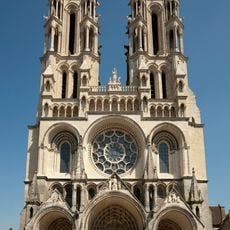
Palais épiscopal de Laon, Medieval episcopal palace in Laon, France
The episcopal palace features nine pointed arches across its main facade, paired with Renaissance windows and three jutting turrets that face the ramparts. This combination of architectural styles shows how the building evolved through renovations over time.
The bishopric was founded in the early 6th century, and the first palace stood along the old castrum wall; excavations in 1979 found Carolingian structures and a triens of Avitus. In 1112 Bishop Gaudry was killed in a fiscal revolt that burned the palace. Bishop Hugues began repairs, Barthélemy de Jur added a fortified door and covered path, and Gautier de Mortagne built the double chapel around 1150.
The two stacked chapels from the 12th century, dedicated to Saint James and Saint Nicholas, show how medieval bishops organized their spiritual life within the palace walls. These spaces reveal how religious devotion shaped the daily routines of those who lived here.
The palace houses the conseil de prud'hommes, the tribunal d'instance and the tribunal de grande instance, so courtrooms and offices occupy the former episcopal rooms. Visitors can see the courtyard arcades and the facade from place Aubry, next to the cathedral; access to the interior depends on court activity.
In 1805 a pit was dug in the courtyard to melt down the cathedral bells, and the wrought-iron gate closing the court dates from 1895, replacing a strong gate destroyed in 1823. The three openings onto the rampart keep their original colonnettes and capitals, though Maurice Berry gave them their present rectangular form.
The community of curious travelers
AroundUs brings together thousands of curated places, local tips, and hidden gems, enriched daily by 94,458 contributors worldwide.