Casa Xanxo, Gothic mansion in Perpignan, France
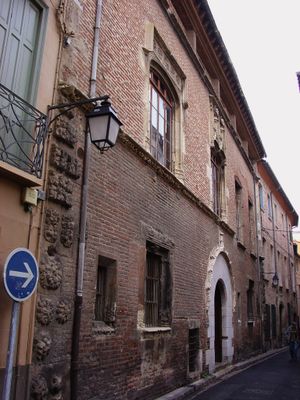
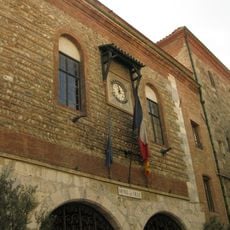
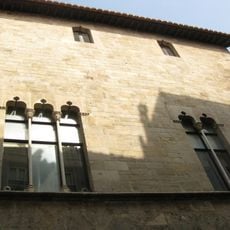
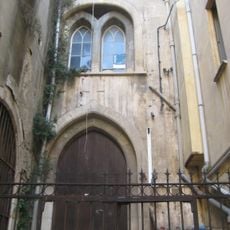
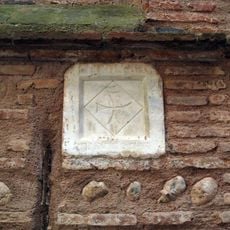
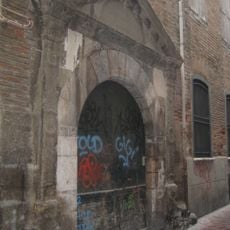
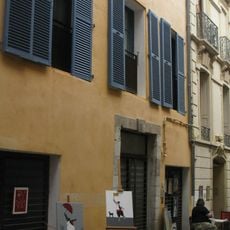
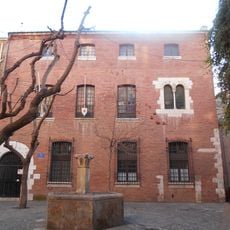
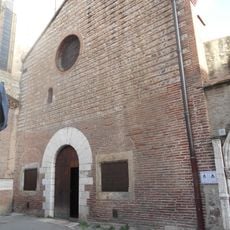
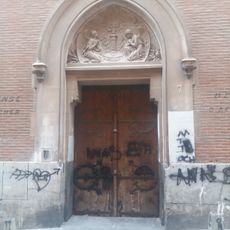
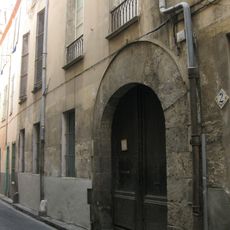
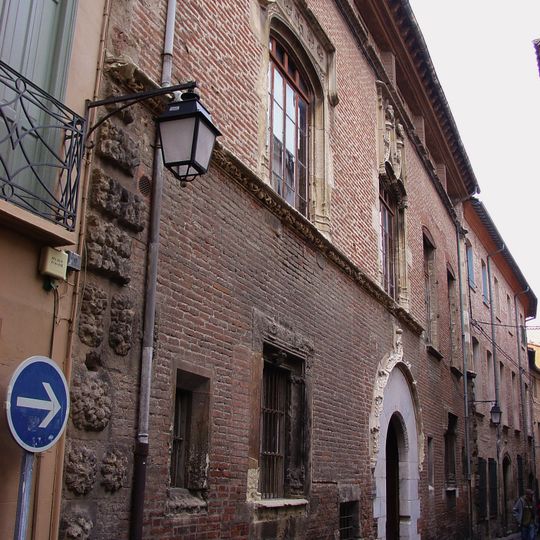
Casa Xanxo is a Gothic mansion at 8 rue de la Main de Fer in Perpignan's Saint-Jean district. Its street facade of narrow reddish-brown brick rises to a projecting brick cornice and dark tiled eave, with a tall round-arched window at left, a small grilled window below, and a pointed-arched doorway with pale stone surround. A carved marble portal and a mid-height frieze showing the Seven Deadly Sins survive on the facade.
Bernat Xanxo, a wealthy cloth merchant, built the house from 1506 on the site of four demolished houses. In 1530 it passed by marriage to the de Llupià family, whose Joan de Llupià chose the Spanish side in 1652 and went into exile, his goods confiscated. From 1803 to 1919 it housed the Masonic lodge "L'Union"; the city bought it by pre-emption in 2000.
The house takes its name from Bernat Xanxo, the cloth merchant who built it from 1506. In 1530 it passed by the marriage of Angela Xanxo to Francesc de Llupià into that family, which held the royal procuratorship of Roussillon and Cerdagne. Between 1803 and 1919 it housed the Masonic lodge "L'Union", Perpignan's main lodge, gradually replaced by the social club Cercle de l'Union.
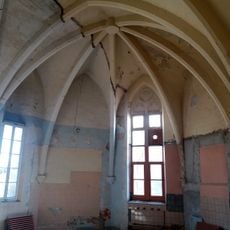
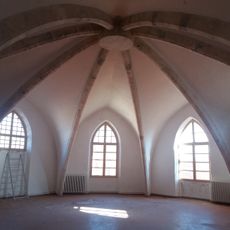
Casa Xanxo stands at 8 rue de la Main de Fer, in the Saint-Jean district of Perpignan. Only the first-floor reception hall of the original house survives, so the visit is short; the carved marble portal and the frieze of the seven deadly sins are on the street facade and can be seen from outside.
The facade features an uncommon stone carving depicting the seven deadly sins arranged around a human skull. This unusual sculptural statement symbolized a warning about the afterlife and was a rare choice for a merchant's residence during that era.
The community of curious travelers
AroundUs brings together thousands of curated places, local tips, and hidden gems, enriched daily by 93,898 contributors worldwide.