Campo Santo de Perpignan, Medieval cloister cemetery in Perpignan, France
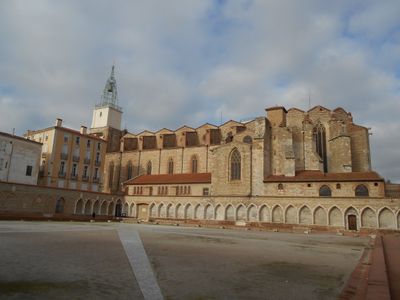
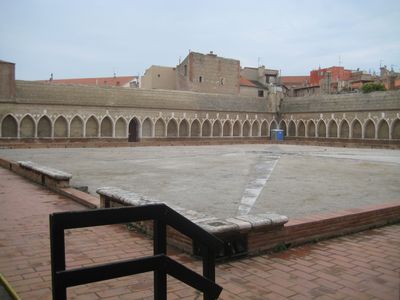
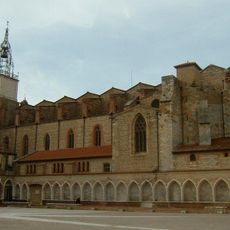
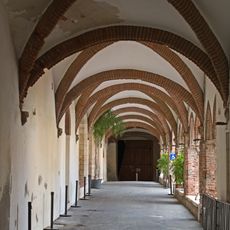
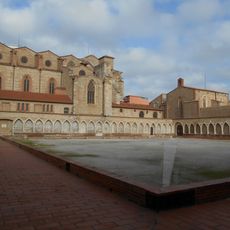
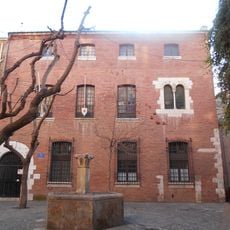
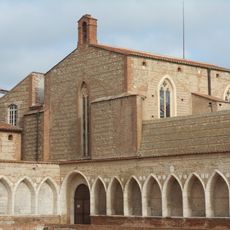
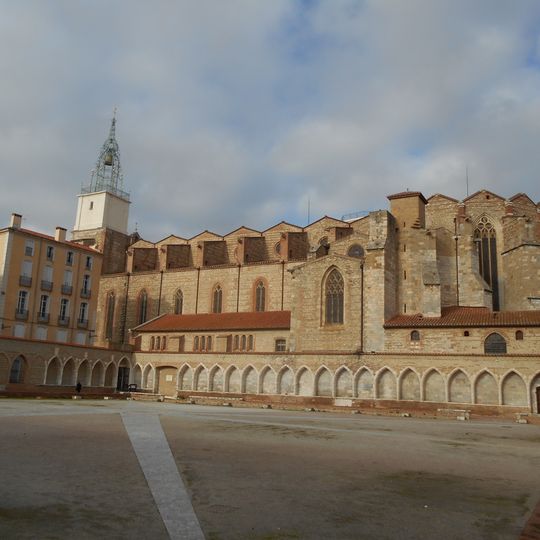
Campo Santo de Perpignan is a medieval cloister cemetery with three surviving galleries of pointed arches, each about 56 meters long, built of brick and pale stone around a dirt courtyard. A tower with four small arch openings and a metal cage stands at one corner, and a red-tiled roof covers one wing.
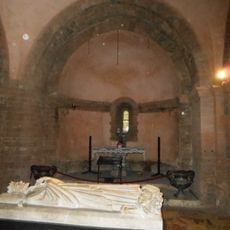
Construction of the cloister began as early as 1298, before the 1302 tombstone of Guillem Jorda, called the initiator of the work. A 1331 ordinance of King James II of Majorca ordered work resumed after the new Saint-Jean church encroached on the old cemetery south of Saint-Jean-le-Vieux. The walls and the Funeraria chapel were classified as historical monuments on 30 June 1910.
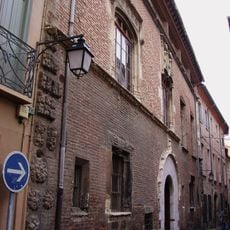
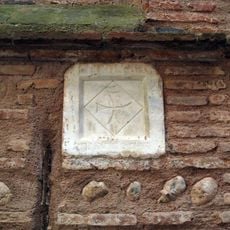
The burial spaces here display coats of arms belonging to important families from Perpignan, showing how social rank determined where people were laid to rest. You can still see these family emblems carved into the stone walls and monuments.
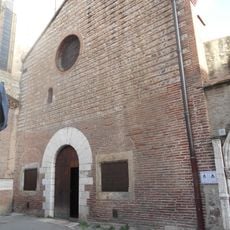
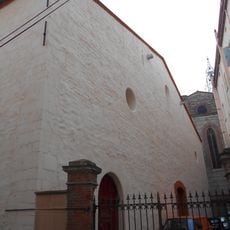
The site lies immediately east of the Cathedral of Saint John the Baptist and the Chapel of the Devout Christ, in Perpignan's old town. The west gallery was demolished in 1825, so the courtyard is entered from that side; the three surviving galleries frame the other three sides. The Funerària chapel occupies the north-east corner.
The central ossuary was pierced in 1321 to bury the poorest, while wealthy families held Gothic niches with coats of arms along the galleries. After the French Revolution the building served the army as a store and stable, and the gendarmerie occupied it until 1984.
The community of curious travelers
AroundUs brings together thousands of curated places, local tips, and hidden gems, enriched daily by 94,703 contributors worldwide.