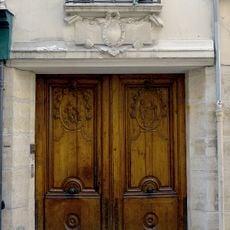
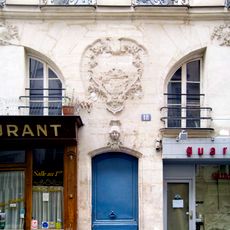
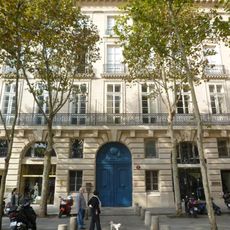
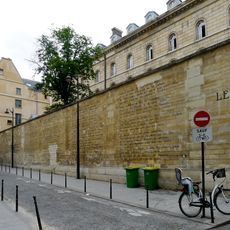
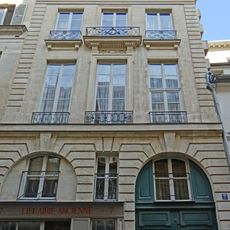
Saint-Sulpice Seminary, Catholic seminary at Place Saint-Sulpice, Paris, France.
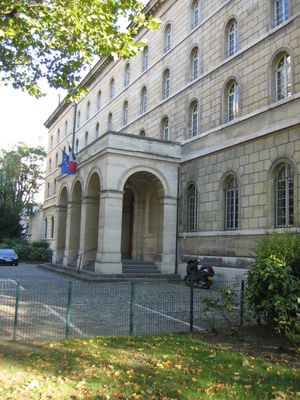
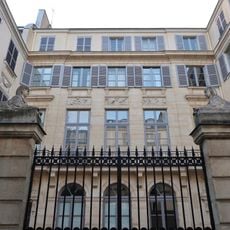
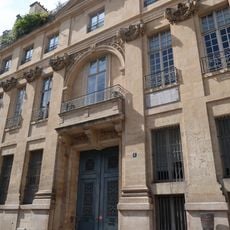
Saint-Sulpice Seminary is a neoclassical building on Place Saint-Sulpice in the 6th arrondissement of Paris, comprising four interconnected three-story structures arranged around a central courtyard. The complex was designed following Italian palace principles and completed in 1838.
City architect Étienne-Hippolyte Godde designed the building for the Society of Priests of Saint Sulpice, with construction running from 1820 to 1838. The seminary closed in 1906 following France's law separating Church and State, after which the building was repurposed for government use.
The Society of Priests of Saint Sulpice, re-established by Louis XVIII on 3 April 1816, ran the seminary here until December 1906. Its name comes from the parish founded by Jean-Jacques Olier, whose training house at Vaugirard (1641) served as a model for seminaries across France. The chapel of the Virgin, with stained glass and a coffered ceiling, sits perpendicular to the south wing and is now an administrative room closed to the public.
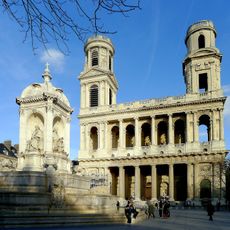
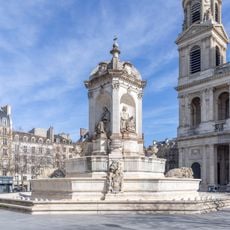
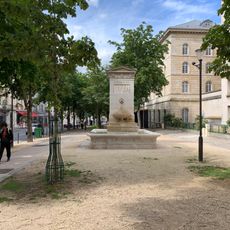
The building sits directly on Place Saint-Sulpice, a busy square in the 6th arrondissement with good public transport access. The exterior and courtyard are visible from the square, but the interior is not open to visitors since it functions as an administrative office building.
A chapel dedicated to the Virgin, with stained glass and a coffered ceiling, stands perpendicular to the south wing, opposite the facade on the square. It is now an administrative room and cannot be visited. The building was used for flood victims in 1910 and for refugees and soldiers on leave during World War I before the Finance Ministry took it over in 1922.
The community of curious travelers
AroundUs brings together thousands of curated places, local tips, and hidden gems, enriched daily by 92,795 contributors worldwide.