Musée de la Fraise et du Patrimoine, Agricultural museum in Plougastel-Daoulas, France.
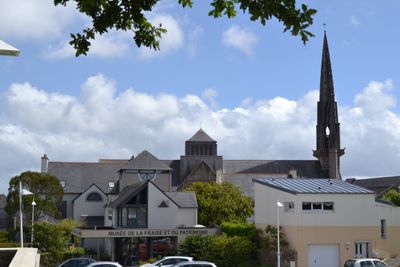
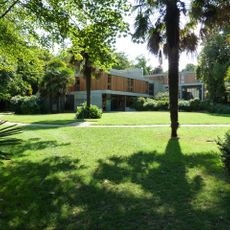
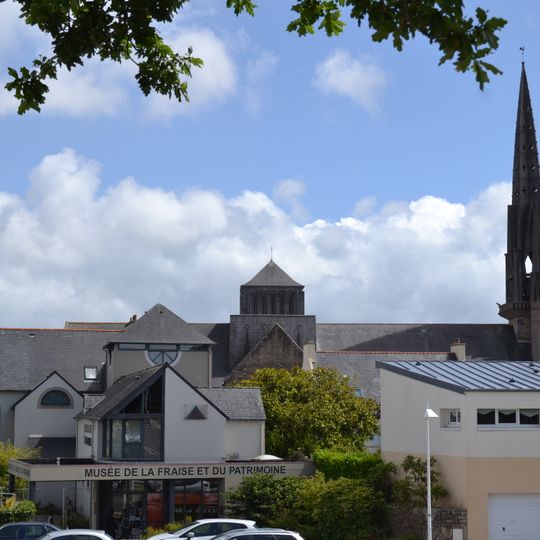
Musée de la Fraise et du Patrimoine occupies the former maison Nicolle in central Plougastel-Daoulas, a low pale grey building whose flat-roofed entrance carries a white band inscribed with the museum's name above the glass doors. A taller block with a steep dark grey pitched roof and a small triangular dormer rises behind it, and a grey-roofed wing with a small arched window extends to the left.
The museum began in 1980 with the association Les Amis du Patrimoine de Plougastel. The town bought the Maison Nicolle in December 1985, an extension was built from 1990, and the Musée du Patrimoine opened fully in 1992. It took the name Musée de la Fraise et du Patrimoine in 1995 and closed in November 2024 for a complete renovation, reopening on 1 August 2026 as the Musée du Pays Plougastel.
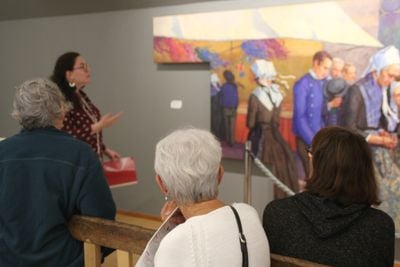
Over sixty mannequins show the peninsula's costumes from 1820 to the present, among the most colourful collections in Finistère. The costume stayed bright until the First World War, then darkened as most Plougastel families went into mourning. Men's and children's dress kept blue, green and mouk, a violet shade that appeared in the late 19th century; men abandoned the costume around the 1950s, and it now returns for processions and folk festivals.
The museum is accessible for visitors with reduced mobility, and parking is available at the entrance. Plan for a one to two hour visit to comfortably view all the collections at your own pace.
The museum serves as one of three Geopark Armorique Houses and displays exhibits about flax cultivation. This overlooked crop once supported the local economy and was essential to everyday life.
The community of curious travelers
AroundUs brings together thousands of curated places, local tips, and hidden gems, enriched daily by 94,659 contributors worldwide.