Musée historique de Haguenau, History museum in Haguenau, France
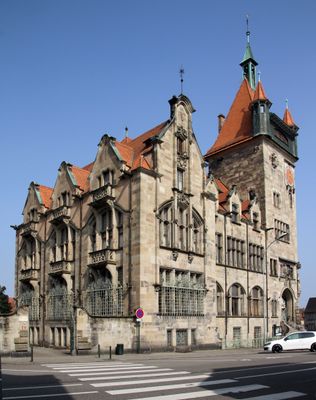
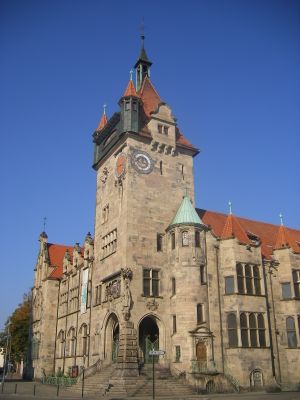
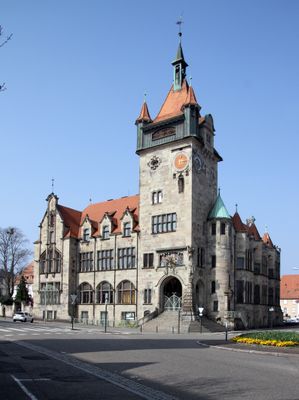
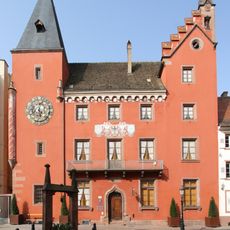
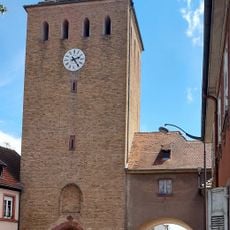
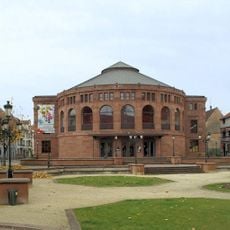
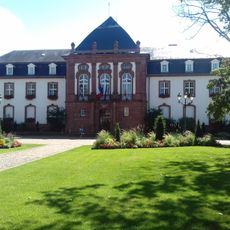
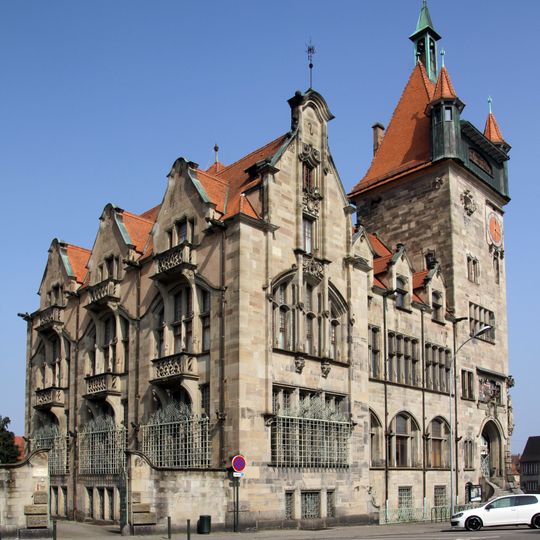
The Musée historique de Haguenau is a neo-Gothic and neo-Renaissance building designed by the Strasbourg firm Kuder and Müller and inaugurated in 1905. Its pale brown and grey stone facade has steep red tiled roofs, multiple gables, and a square tower with a clock face and a red pyramidal roof topped by a small spire. The entrance is flanked by a sculpture of Frederick Barbarossa by Charles Albert Schultz and a ceramic of the emperor's court by Charles Bastian after Léo Schnug.
The museum was founded by mayor Xavier Nessel, an amateur archaeologist who donated his collection to the city. The building, designed by Strasbourg architects Kuder and Müller, was erected between 1900 and 1905, when Haguenau was part of German Alsace-Lorraine. It was intended to house the municipal collections, archives and library, as stated on the entrance pediment. In 1972 the ethnographic collections moved to the nearby Musée alsacien.
The museum keeps Strasbourg faience made by the Hannong family and a modern art collection with Art Nouveau glass, including the Henninger donation of 2014: 81 works by Gallé, Lalique and Daum, plus a cabinet by Majorelle. Alsatian folk art was transferred to the neighbouring Musée alsacien in 1972.
The museum is located in the city center and can be reached on foot from other attractions nearby. Check opening times in advance, as hours vary depending on the season.
The Art Nouveau glassware comes from the Henninger collection, donated in 2014: 81 works by Gallé, Lalique and Daum, plus a cabinet by Majorelle, then valued at €357,600. The museum also holds Strasbourg faience made by the Hannong family.
The community of curious travelers
AroundUs brings together thousands of curated places, local tips, and hidden gems, enriched daily by 94,661 contributors worldwide.