Site archéologique de la carrière antique grecque de la Corderie, Ancient Greek quarry archaeological site in Saint-Victor, Marseille, France
The ancient quarry of La Corderie is a sunken limestone extraction site cut more than 6 m deep into pale yellow-beige bedrock. Its stepped, rectangular pits and trenches, separated by rough-hewn rock walls, include shallow greenish pools and abandoned blocks left because of flaws. A finished but unused sarcophagus trough was found still in place.
The quarry supplied stone to the Greek settlement of Massalia starting in the 6th century BC and continued through Roman times. Its discovery during excavations in 2016 led to its official protection as a historical monument.
The quarry's limestone is known as Corderie limestone, a name proposed by researcher Michel Bats because of its specific formation and weathering. Workers cut blocks with picks, escouades, wedges and levers, and one finished but defective sarcophagus trough was found still in place, never used.
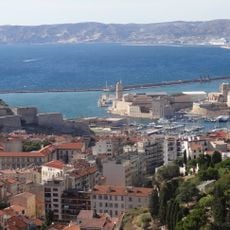
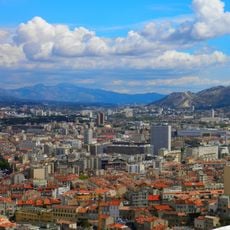
The quarry lies on Boulevard de la Corderie in the Saint-Victor neighbourhood, in Marseille's 7th arrondissement. The site was uncovered during preventive excavations in 2016–2017 and is classified as a historical monument; it is private property, so access is not freely guaranteed. The extracted area descends more than 6 metres into the limestone.
Among the few comparable quarries are Selinunte and Syracuse in Sicily and Thasos in Greece, as the archaeologist Philippe Mellinand of INRAP noted: Greek quarries studied elsewhere are mostly marble ones. A finished but defective sarcophagus trough was found still in place, never used.
The community of curious travelers
AroundUs brings together thousands of curated places, local tips, and hidden gems, enriched daily by 92,820 contributors worldwide.