Ribeyrès viaduct, Viaduct in France
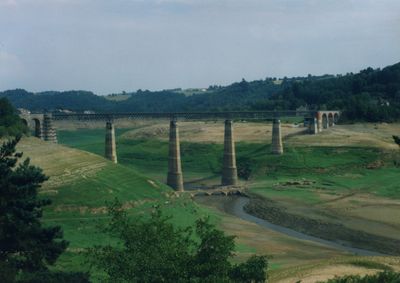
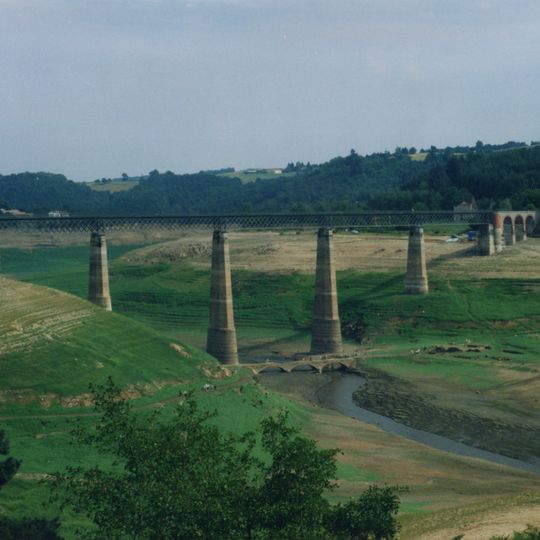
The Ribeyrès viaduct is a railway bridge that stretches across a deep valley in the Cantal region, connecting Lacapelle-Viescamp and Le Rouget-Pers. The structure measures over 300 meters in length and rises about 56 meters above the ground, with metal beams forming the main spans and stone arches providing additional support.
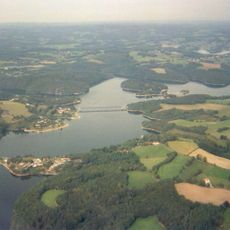
The viaduct was designed and built in 1866 by engineers Wilhelm Nördling and Bertoux to carry trains across the Cère valley and connect the railway line between Figeac and Arvant. After a dam was constructed in the 1940s creating the artificial lake of Saint-Étienne-Cantalès, fluctuating water levels threatened the metal pillars, which were later encased in concrete for protection.
The viaduct takes its name from Le Ribeyres, the hamlet at its southern end. Its five metal piers were encased in concrete in 1942, before the Saint-Étienne-Cantalès dam was inaugurated on 1 July 1945. When the reservoir is full the deck stands just a few metres above the water; when it is drawn down, the viaduct rises 56 m above the ground at its highest point.
You can explore the area around the viaduct from nearby paths and enjoy the structure from different angles and distances. The surrounding villages are small and peaceful, offering walking routes through countryside roads that provide various viewpoints of the bridge.
The viaduct was originally built with exposed metal pillars, but these were encased in concrete in the 1940s to protect them from water damage caused by the newly created lake. Today, the visible concrete casings show an unusual blend of original iron construction and later reinforcement.
The community of curious travelers
AroundUs brings together thousands of curated places, local tips, and hidden gems, enriched daily by 92,883 contributors worldwide.