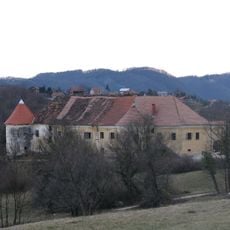
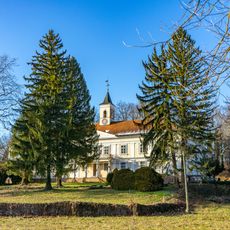
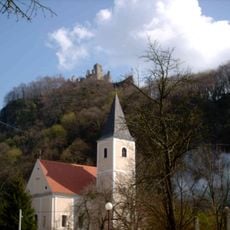
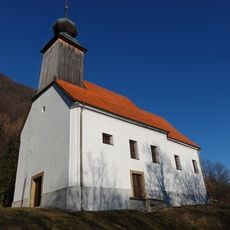
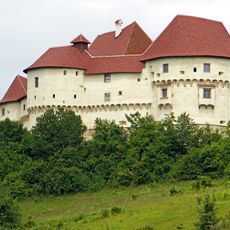
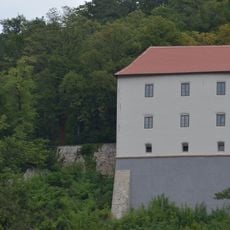
Kosztel vára, Fortress ruin in Kostel, Pregrada, Croatia
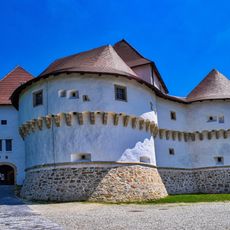
Kostelgrad occupies an elliptical plateau of about 70 by 30 metres on the Kostel hill at 405 metres above sea level. Its core is a two-winged palace around a pentagonal courtyard, with an outer defensive wall and four towers; the eastern entrance tower and the central artillery tower survive to two and three storeys.
The fortress was first mentioned in 1339 as property of the Kőszegi family; after their disloyalty it returned to the king, who granted it in 1399 to the Counts of Celje. After Ulrich of Celje was murdered in 1456, the castle passed through several hands until 1523, when it came to the Keglević family. They made it their seat and rebuilt it from the foundations; in the late 17th century they left for a new mansion in the Pregrada valley.
The name Kostelgrad comes from the Latin castellum, fortress, and the Keglević family made the castle their seat after buying it in 1523, holding it for more than two centuries. They came from their Bosnian estates to escape Ottoman attacks and rebuilt the castle from its foundations. After the Ottoman threat passed, at the end of the 17th century, the family left for a comfortable mansion in the Pregrada valley.
A visit requires good footwear and patience for the steep ascent, as paths are uneven and need steady footing to navigate safely. The view from the top rewards the effort and offers a clear sense of the surrounding landscape.
The fortress was first mentioned in 1339 as property of the Kőszegi family, and after their disloyalty it reverted to the king. Excavations took place in 1953, and the walls still stand a storey high. The name comes from the Latin castellum, meaning fortress.
The community of curious travelers
AroundUs brings together thousands of curated places, local tips, and hidden gems, enriched daily by 94,041 contributors worldwide.