Benedictine abbey in Vértesszentkereszt, Medieval Benedictine abbey ruins in Vértes forest, Hungary
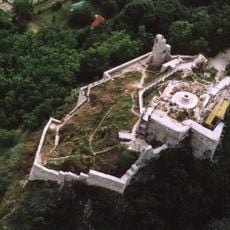
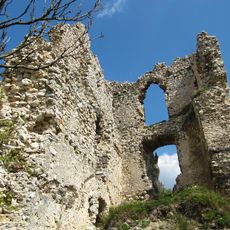
The Benedictine abbey in Vértesszentkereszt is a monastic complex whose ruins lie within woodland north of Gerencsérvár, featuring white stone walls and architectural elements from different periods. The structure combines Romanesque and early Gothic styles in its surviving remains.
The monastery was first documented in 1146 and experienced major expansion in the early 13th century under the patronage of the powerful Csák family. Excavations between 1964 and 1971 uncovered the church foundations and revealed the site's long period of use.
Medieval charters called the site Szent Kereszt, Udvarhely and Keresztur; the name Vértesszentkereszt dates from the 19th century. Csák Miklós left the estate to his youngest son as a locus specialis, an "udvarhely", a custom of the period. The sanctuary's three-lobed east end forms a trefoil cross with the main apse.
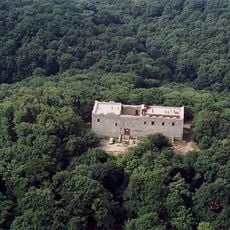
The ruins stand on a rise in dense woodland about 2 km north of Gerencsérvár, reachable from Oroszlány or Pusztavám; there are no signs marking the way. The site was not open to visitors as of 2016, so check access before setting out. The ground is uneven and overgrown.
In the late 18th century the Esterházy family moved 24 carved stone pieces from the abbey into an artificial ruin in their Tata English garden. The finest carvings are now in the Kuny Domokos Museum in Tata. The medieval charters called the site Szent Kereszt, Udvarhely or Keresztur; the name Vértesszentkereszt dates only from the 19th century.
The community of curious travelers
AroundUs brings together thousands of curated places, local tips, and hidden gems, enriched daily by 94,623 contributors worldwide.