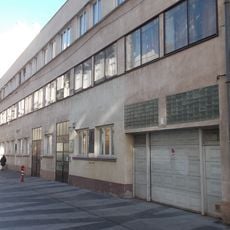
Synagogue de Hegedűs Gyula utca, Status quo ante synagogue in Újlipótváros, Budapest, Hungary
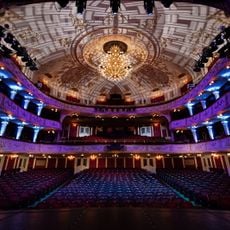
The Hegedűs Gyula Street Synagogue occupies a residential building, with an eclectic street front and a neo-Renaissance inner courtyard linked by Lipót Baumhorn's Art Nouveau solutions. It consists of a large sanctuary seating up to nine hundred people and a smaller prayer house. A distinctive element of the interior is the colored steel-and-glass roof.
The Orthodox community of northern Lipótváros moved its prayer house from Koháry Street to Csáky Street, where Béla Vajda converted a flat into a prayer room in 1911. The building was later bought and expanded with a courtyard wing under Lipót Baumhorn's guidance by 1927. It was further enlarged from the 1960s, and in the 2000s donations funded the dome's repair, new floor tiles and a kosher kitchen.
The community follows the Status Quo Ante current, neither Orthodox nor Neologist, and has kept a conservative liturgy: no organ, the Torah reading table in the centre, an older prayer order. District president is Müncz László, chief rabbi Prof. Dr. Alfréd Schőner, cantors Tamás Biczó and Ervin Klein. Since 1991 the cultural hall has housed a day centre for elderly people of the district.
The building is located in Budapest's Újlipótváros district and is easily reached by public transportation. Keep in mind it is an active place of worship, so respectful behavior is expected from visitors.
The prayer hall opened in 1911 inside a rented apartment building; the community later bought the house and expanded it into a courtyard synagogue by 1927 under Lipót Baumhorn's guidance. Its interior keeps a conservative layout: no organ, the Torah-reading table in the centre, and an older prayer order than the Dohány Street synagogue.
The community of curious travelers
AroundUs brings together thousands of curated places, local tips, and hidden gems, enriched daily by 94,059 contributors worldwide.