Blue Dyeing Museum, Textile museum in Pápa, Hungary
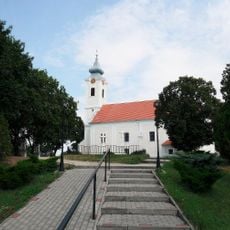
The Blue Dyeing Museum in Pápa displays in authentic factory buildings the tools, machines, and materials used for fabric processing and printing. The exhibition spans multiple floors with vats, rollers, wooden pattern blocks, and other equipment from the production process.
Carl Friedrich Kluge, whose forebears had worked in cloth dyeing, came from Sorau in Saxony to Hungary in 1783 and opened a blue-dyeing workshop in Sárvár. In 1786 he moved to Pápa and set up his works on the site of the present building, where four or five similar workshops already operated. The family ran it for seven generations until 1956, when the building and its original equipment were listed as monuments; restored with state support in 1961–1962, it opened as a museum in 1962 and was renovated in 1983 for the company's 200th anniversary.
The museum shows how blue dyeing was practiced locally across generations and which craft techniques were used in the process. You can observe how workers operated at different production stages and what role this craft held in the community's economy.
The museum occupies the former Kluge blue-dyeing works, taken over by the Pápa municipality at the start of 2011. The building and its original fittings were placed under monument protection in 1956 and restored in 1961–1962, so the workshop equipment stands where it was used. Look for the 1912 German-made metal-frame printing machine that replaced an earlier wooden-framed perrotine press.
The museum keeps the 1809 sample book of Kluge Károly, holding 72 textile swatches with the recipes needed to make them. He wrote the recipes using symbols for chemicals and plants, since modern chemical notation did not yet exist. The book points to unusually high professional training.
The community of curious travelers
AroundUs brings together thousands of curated places, local tips, and hidden gems, enriched daily by 93,029 contributors worldwide.