Bakonybél Abbey, Benedictine monastery in Bakonybél, Hungary
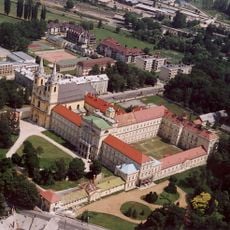
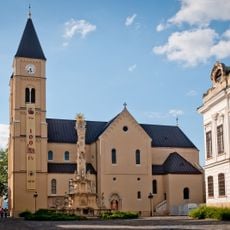
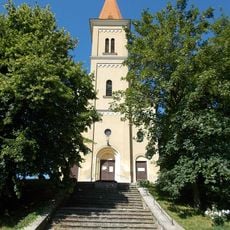
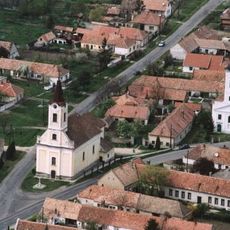
Bakonybél Abbey is a Benedictine monastery featuring a Baroque church with Rococo decorative elements and a large altar painting. The complex includes the main sanctuary, connected cloisters, residential quarters for the monks, and supporting structures arranged around courtyards.
Gunther, a Thuringian nobleman and relative of Queen Gisela, lived as a hermit near Veszprém around 1018 and urged King Stephen I to found the monastery. The foundation dates to 1016–1020; the first abbot was Gunther, and the earliest authentic charter is from 1086 under King Ladislaus I. The Árpád-era monastery was abandoned after 1548, and the Baroque church and convent were built in 1759–1782.
The monastery is a dependent community of the Pannonhalma Archabbey within the Hungarian Benedictine Congregation, with five monks in eternal vows and three in temporary vows. Its patron is Saint Maurice, and the community keeps the Benedictine daily order in the Bakony hills.
The monastery stands in the Bakony hills at Bakonybél, reached by local roads; the grounds are level around the church and cloister. A modern visitor building and an exhibition stand beside the church. The community belongs to the Hungarian Benedictine Congregation under Pannonhalma Archabbey, so dress and behave respectfully in the sacred spaces.
The monastery was founded after Gunther, a Thuringian nobleman and relative of Queen Gisela, persuaded King Stephen I in 1037 to turn his royal manor into a monastery dedicated to Saint Maurice. The Venetian Gerard, tutor of Stephen's son Emeric, had earlier lived seven years as a hermit in a chapel nearby.
The community of curious travelers
AroundUs brings together thousands of curated places, local tips, and hidden gems, enriched daily by 93,604 contributors worldwide.