Fenyőfői Ősfenyves Természetvédelmi Terület, Ancient pine forest reserve in Győr-Moson-Sopron County, Hungary
Fenyőfői Ősfenyves Természetvédelmi Terület is a 449-hectare protected area between Fenyőfő and Bakonyszentlászló, managed by the Balaton Uplands National Park Directorate. It holds the only Hungarian stand of Festuco vaginatae-Pinetum sylvestris, a sand pine forest whose undergrowth mixes lowland sand species such as Festuca vaginata and Stipa sabulosa with mountain plants like Pyrola and Cephalanthera longifolia.
For long the pines near Fenyőfő were thought to have been planted from Austria to fix the drifting sand. In 1799 Pál Kitaibel noticed the native-looking pinewood beside a sand-steppe and suspected a relict community, but proof came only at the end of the 20th century. The area has been under special protection since 1954.
The name "ősfenyves" means ancient pine forest, though scientists note the term has no strict botanical basis. The forest lies between Fenyőfő and Bakonyszentlászló, and a carved wooden kopjafa among the pines commemorates Pál Kitaibel, who noticed the native-looking stand in 1799.
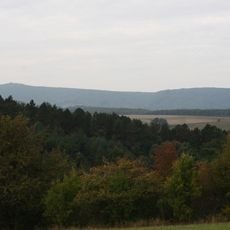
The 449-hectare reserve is managed by the Balaton Uplands National Park Directorate and is freely open to visitors. A wooden kopjafa carved in memory of Pál Kitaibel stands among the pines. The forest lies between Fenyőfő and Bakonyszentlászló, where the terrain is nearly flat, with less than twenty metres of relative relief.
The undergrowth brings together plants of the warm sandy lowlands, such as the sand violet and sand feather grass, with species of cool mountain woods like the round-leaved wintergreen. Two insect rarities live here: the jewel beetle Chalcophora mariana and the timberman beetle Acanthocinus aedilis, both tied to the Scots pine.
The community of curious travelers
AroundUs brings together thousands of curated places, local tips, and hidden gems, enriched daily by 92,615 contributors worldwide.