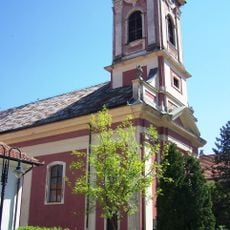
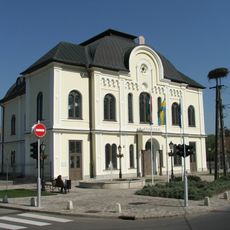
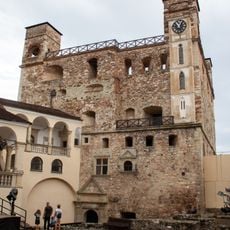
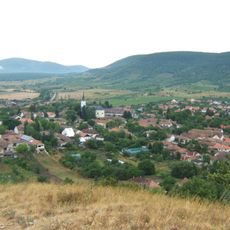
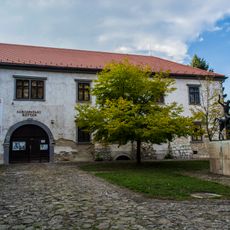
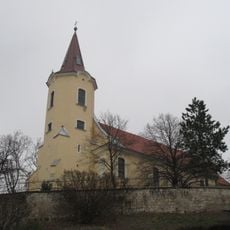
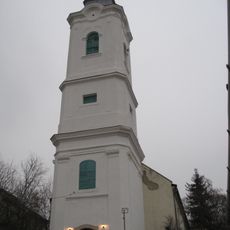
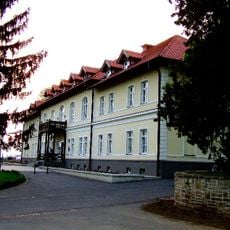
Szabolcs earthwork, Medieval hillfort in Szabolcs, Hungary.
Szabolcs earthwork is an early medieval hillfort made of compacted earth, located in the village of Szabolcs in northeastern Hungary. The site consists of raised earthen ramparts and surrounding ditches set on a gentle rise close to the Tisza River.
Archaeological excavations date the earthwork to around 950, when it may have been the seat of a Hungarian tribal chief; Anonymus credits the leader Szabolcs with building it after the conquest. Two sides followed the high bank of the Tisza and a third, longest side was cut as an artificial river channel, making the fort an island. In the second half of the 11th century the ramparts were raised and thickened against Uz and Kun raids (1068, 1085, 1091); the first written mention is the 1092 synod of Szabolcs held under King Ladislaus. After Andrew II gave away the county's lands, Mongol cavalry took and destroyed the fort during the Tatar invasion, ending its military role.
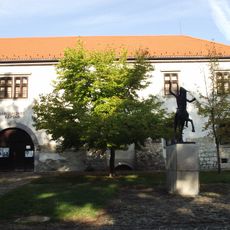
The name Szabolcs comes from the tribal leader who, according to the chronicler Anonymus, built the fort after the Hungarian conquest. The village and later the county of Szabolcs took this name. Since 1996 a statue of Chief Szabolcs stands at the entrance, placed for the 1100th anniversary of the conquest.
The earthwork lies just north of Szabolcs village, reached by turning off Route 3821 onto Petőfi út; canoeists on the Tisza can also approach from the river. Three gaps in the ramparts mark the former paved gates, and a hollow inside may have been a cistern or well. The grass-topped ridge is walked on foot, with uneven ground along the slopes.
Although the site has seen little construction since the Middle Ages, it has yielded objects from the original Hungarian settlement period during archaeological digs. Finds from this early era are rarely visible outside of museums, which makes this open-air site an exception.
The community of curious travelers
AroundUs brings together thousands of curated places, local tips, and hidden gems, enriched daily by 94,658 contributors worldwide.