Vértesszőlős, Archaeological site and protected area in Komárom-Esztergom County, Hungary.
Vértesszőlős is an archaeological site and protected area in Komárom-Esztergom County, spanning diverse landscapes with river valleys, hills, and plains. The terrain shows different rock formations and natural features shaped over long periods.
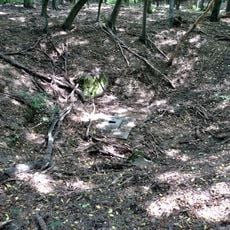
In 1962 Márton Pécsi found prehistoric remains in a freshwater limestone quarry at Vértesszőlős. László Vértes led excavations from 1963 to 1968, uncovering about 350,000-year-old Lower Paleolithic occupation layers. Finds include an occipital bone nicknamed "Sámuel", two child teeth, chopper tools, hearths and animal footprints. The site has been a nature reserve since 1976.
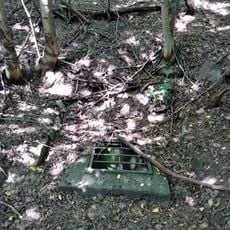
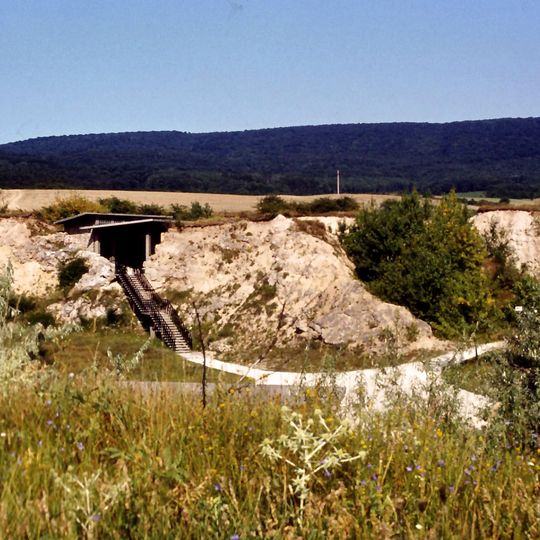
The site is named Őstelep, "ancient settlement", and has been a display site of the Hungarian National Museum since 1968. The excavated find complex is presented as an open-air museum, with protective buildings sheltering the layers in a landscaped park.
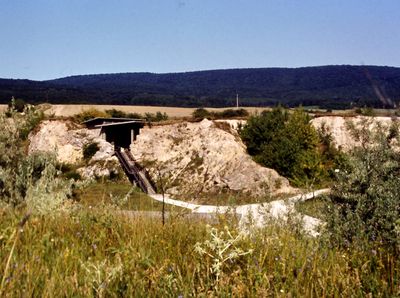
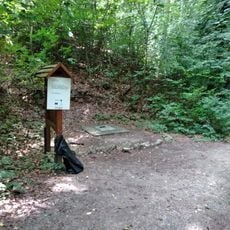
The site lies just northwest of Tatabánya, about 2 km from the town, in the Által-ér valley at the foot of the Gerecse hills; the village is crossed by the main road 1 and the Budapest–Komárom–Győr railway line. The excavated area is a fenced, landscaped 38-hectare reserve, and the finds are shown as an open-air museum in protective buildings. Visitors descend the long staircase from the wooden shelter over the eroded travertine face to reach the ground-level path.
The site preserves a footprint of prehistoric man in the mud, alongside fossilized tracks of ancient animals. Excavators also found fireplaces and chopper tools made from split pebbles in layers about 350,000 years old.
The community of curious travelers
AroundUs brings together thousands of curated places, local tips, and hidden gems, enriched daily by 93,721 contributors worldwide.